Thursday, December 6, 2012

Here Comes the Judd?

So, I was recently asked to comment on the announcement that Ashley Judd is considering running for the US Senate seat in her home state of Kansas, where she is very, very popular. A piece was posted on this on Tuesday on the Huffington Post site, entitled Ashley Judd, Kentucky Senate Candidate? Actress 'Seriously' Exploring Democratic Bid. Written by Nick Wing, it begins
Actress Ashley Judd was a huge supporter of President Barack Obama during his reelection campaign. Now she's reportedly exploring options to take down one of his biggest congressional adversaries.
Politico reports that Judd is looking into mounting a Democratic challenge to Senate Minority Leader Mitch McConnell (R-Ky.), citing discussions with sources with knowledge of the situation. Dan Logsdon, chairman of the Kentucky Democratic Party, told Politico that he'd heard the considerations were "serious."
Rep. John Yarmuth (D-Ky.), who optimistically weighed in on the initial round of speculation floated last month, similarly told Politico that he had heard Judd was "serious" about the potential move to politics. Some sources, however, have suggested that she might wait until 2016, when she could challenge freshman Sen. Rand Paul (R-Ky.).
Okay, so it's a news leak, and that's all, it seems. Here's something more direct:

Judd, a Golden Globe-nominated actress with deep ancestry in Kentucky, addressed the rumors in a statement last month.
"I cherish Kentucky, heart and soul, and while I'm very honored by the consideration, we have just finished an election, so let's focus on coming together to keep moving America's families, and especially our kids, forward," she said.
And while the possibility of bringing in Judd's star power into a tough race against a Republican leader has excited many Democratic operatives, one of Judd's own family members doesn't believe she'll run.
"I don't think there's any possibility of that happening," Polly Judd, the 85-year-old grandmother of Ashley and her singer sister, Wynonna, told the Associated Press in a recent interview, going on to praise McConnell for his 5 terms of service.

So, that's the story, and I was asked to say a few words about this possibility on HuffPost Live, their online, streaming network that provides live programming weekdays for 12 hours a day.  They way they explain themselves is
HuffPost Live doesn't have shows in the traditional sense. Our programming is built around segments spotlighting the biggest, hottest, most engaging stories HuffPost is covering at any given moment and using them as the jumping-off points for conversations, commentary, and comedy. These segments are as long -- or as short -- as they need to be. We aren't limited by the usual time constraints of TV.

Instead, HuffPost Live emulates the online experience. No one looks at their watch and thinks, "It's 10 a.m., time for some celebrity news, I think I'll log on to HuffPost!" Instead, readers come to HuffPost to catch up on what's happening in the world and wind up getting caught up in the wide array of compelling stories we offer. You may start with a story on the upcoming presidential debate, then find yourself drawn to some celebrity news, followed by the latest viral comedy video and a segment on the benefits of napping.
As for how they get their guests, here's what they have to say
HuffPost live takes advantage of new media technologies to bring different voices to the conversation. We don't find our guests using a traditional Rolodex. Instead, we reach out via social platforms, see who is tweeting and Facebook posting something interesting on our chosen topics and contact them, asking if they want to come on HuffPost Live and expand on what they said.

And location doesn't matter. Anyone with a smartphone or tablet can instantly join us live. Picture a conversation about parenting with mothers in Kazakhstan, Kenya, and Kentucky, talking to us and to each other and to our users live via Skype or Google Hangout.

And that's how I was brought in, by way of a Google+ Hangout, which is kind of like Skype and video conferencing. I joined in via my iPhone, which is why the quality isn't great. And I happened to be teaching an MA class on Understanding New Media as an adjunct at Fairleigh Dickinson University at the time, so I made this a break, had the video projected up on the screen, but without the sound because that would create a feedback loop, and there is a significant delay, and I connected via my iPhone, with ear buds (also to prevent a feedback loop). I made the mistake of glancing up at the projected image on the screen every so often, so you'll see my eyes look off to the side. What can I say, I wasn't at my best, but it was a great experience, and the first time I had done anything like this with a Hangout and live program.

The segment is archived as part of a larger group of stories under the heading of Port Strike, the first segment being about the strike going on at the Port of Los Angeles, and the Ashley Judd story is about 5 minutes long, starting at 11:25 in, and going to 17:20.  And as always, you can click on the link and see the sites and the video there, or what it here:


So, there you have it. Just another example of the culture of celebrity, with the electronic media undermining print literacy's bias towards specialization, opening the door to the idea that anyone can do anything, because it's all reduced to a performance, or simply just an appearance, on the electronic media.  And this in turn gives us the image politics that Neil Postman so incisively critiqued back in 1985 in Amusing Ourselves to Death.  Back when a movie and TV star was president of the United States, remember? If we're not careful, it could happen again!



Tuesday, December 4, 2012

Imperfectly Divine

 As I mention here on occasion, I'm a member, and in fact the president of Congregation Adas Emuno, a small Reform temple in Leonia, which is a town in Bergen County, New Jersey. So this year I started to attend our Saturday morning Torah study sessions, which are led by our rabbi, Barry Schwartz.  One reason I decided to do this rather than sleep in on Saturday morning was Barry's decision to have us study the Mishneh Torah of Moses Maimonides, the 12th century Jewish philosopher and theologian.

You may not have heard of him, but Maimonides is considered by some to be second only to his namesake, the biblical Moses, in his influence on the development of Judaism. As an authority on the Hebrew bible and Talmud, he also influenced Christian theologians such as Thomas Aquinas. In addition to being a theologian and philosopher, Maimonides was also a practicing physician.

Now, to backtrack for a moment, students of media ecology, and the history of writing, know that there are two major origination points for the alphabet. 

The first is circa 1500 BCE, when the Semitic alphabet first appears in the Sinai desert. This is a major breakthrough because previously, logographic and syllabic writing systems required thousands or hundreds of different characters, whereas the Semitic alphabet reduced it all down to 22 consonants.  Following the introduction of the Semitic alphabet, we get the events represented by the story of Moses, and a new kind of culture appearing in that region, which is to say, ancient Israel. 

The Semitic alphabet diffused across the Mediterranean to the Greeks by the way of the Semitic people known as Phoenecians, and the Greeks adapted it to their own language, changing some of the consonants into vowels in the process. Out of this came everything we know and admire about ancient Greece.

So, we have two major alphabetic cultures in antiquity, Greece and Israel, or as some put it metonymically, Athens and Jerusalem. Athens gives us our secular-humanist culture, associated with the Greco-Roman tradition, and Jerusalem gives us our religious and legal-ethical culture, associated with the Judeo-Christian tradition. But advantage goes to Athens, not only because secular humanism has been increasingly more dominant since the Enlightenment, but also because the Christian church embraced Greco-Roman thought, especially once Christianity completely broke with Judaism, and was adopted by the Roman emperor Constantine.

We just recently discussed the book Sexual Personae by Camille Paglia in an MA class I'm teaching at Fordham University, and Paglia argues how pagan culture never truly vanished, but remained very much just under the surface of western Christian culture, in both its Apollonian and Dionysian forms. And it follows that the Apollonian side of pagan culture is the basis of our secular-humanist orientation.

Anyway, among the differences between the two alphabetic cultures is the fact that Jerusalem retained a strong connection to orality to balance out its commitment to literacy, and an aversion to visual imagery on account of the Second Commandment injunction against graven images of any kind, while Athens developed a highly visual and visualist culture, laying the groundwork for the extreme visualism that emerged via print culture in early modern Europe.

Walter Ong's media ecology sensibility was based, in large part, on his gaining an understanding of the strong residual orality of Judaic culture, and the absence of the visualism that shaped ancient Greece. The 20th century Jewish theologian and philosopher, Martin Buber, had significant influence on Ong's thought on the subject, although the Athens vs. Jerusalem dichotomy is typically associated with Leo Strauss.

Hellenism posed a great challenge to Jewish culture and thought in the ancient world, and the minor holiday of Hanukkah, which we'll begin to celebrate this coming Saturday evening, represents the first major battle between Jerusalem and Athens, not in the sense of direct warfare, but as a war waged within ancient Israel to rid itself of Hellenistic influences. Mostly, however, the battles were intellectual ones, as for example Philo of Alexandria provided an early attempt to synthesize Greek and Jewish thought, one that was largely ignored by Talmudic scholars, but held some influence within the early Christian Church.

Now jump ahead to the 12th century, and we have Maimonides being thoroughly schooled in ancient Greek philosophy, as it was preserved in the Islamic empire, embracing Aristotelian rationalism and attempting to apply it to Talmudic scholarship and Judaic thought. Now this may set off warning signals among followers of general semantics, but after all, Aristotle's logic represented a major advance for its time, and we certainly cannot expect a find a Korzybski-like non-Aristotelian approach in the 12th century.

So, just as Aristotle tried to provide organized summaries of the philosophical thinking of his time, Maimonides tried to do the same for Judaism and Talmudic scholarship. And this effort to summarize and organize can be understood as a shift towards Greek visualism.  In doing so, he left out all of the Talmudic references, the differing points of view that are recorded, removing the sense of an ongoing conversation, dialogue, debate and disputation. The result is something more like a textbook, a step towards the Ramist revolution of the early modern era that Ong researched (interestingly enough, Ramism was the basis of Puritan education, and Maimonides was an important source for Puritan theologians, who argued that they were the new Israelites).

It occurred to me that to take on this kind of summary, and more importantly, to want to make it available to others, suggests an increased accessibility of written works, along the lines that Harold Innis discusses in his seminal media ecology work, The Bias of Communication.  So I checked, and found that the manufacturing of paper, which was invented in China in the 2nd century CE, had spread to the Iberian peninsula during the 10th century.  It follows that by the time of Maimonides, paper had become plentiful, opening the door to and creating a demand for efforts such as he was engaged in.

As an Aristotelian, Maimonides sought to establish first principles, in order to provide a logical basis for Jewish thought, and therefore set forth 13 principles of faith, the first time anything like that had been attempted.  He also argued for highly abstract notions of God and the human soul, in ways that seemed to me to draw on Plato's ideal forms. Again, this is a shift away from the oral, dialogic mode into a more abstract, visual, rational approach.

Now, while recognizing the significance of his accomplishments, my preference is for the Kabbalah and Isaac Luria, as mysticism seems to better work with spirituality than rationality does, although logic can be useful in regard to ethics.  But given our modern understanding about the limits of deductive reasoning (only as good as its premises), the proven effectiveness of empiricism (relying on observable facts), and my own preference for that non-Aristotelian approach of general semantics, and media ecology, I find Maimonides difficult to relate to in many respects, although fascinating to study.

So now, while this doesn't relate directly to Maimonides, I was interested to come across a recent post on the New York Times Opinionator Blog, dated November 25th, and entitled An Imperfect God, by Yoram Hazony, president of the Institute for Advanced Studies at the Shalem Center in Jerusalem and the author of, most recently, The Philosophy of Hebrew Scripture.  Here is how he begins:

Is God perfect? You often hear philosophers describe "theism" as the belief in a perfect being - a being whose attributes are said to include being all-powerful, all-knowing, immutable, perfectly good, perfectly simple, and necessarily existent (among others). And today, something like this view is common among lay people as well. 
This view, I should point out, would directly correspond to that of Maimonides, and of course most other medieval and modern theologians. Anyway, to continue with the post:

There are two famous problems with this view of God. The first is that it appears to be impossible to make it coherent. For example, it seems unlikely that God can be both perfectly powerful and perfectly good if the world is filled (as it obviously is) with instances of terrible injustice. Similarly, it's hard to see how God can wield his infinite power to instigate alteration and change in all things if he is flat-out immutable. And there are more such contradictions where these came from.
The second problem is that while this "theist" view of God is supposed to be a description of the God of the Bible, it's hard to find any evidence that the prophets and scholars who wrote the Hebrew Bible (or "Old Testament") thought of God in this way at all. The God of Hebrew Scripture is not depicted as immutable, but repeatedly changes his mind about things (for example, he regrets having made man). He is not all-knowing, since he's repeatedly surprised by things (like the Israelites abandoning him for a statue of a cow). He is not perfectly powerful either, in that he famously cannot control Israel and get its people to do what he wants. And so on.
Here, Hazony is raising the famous problem of free will, one that Maimonides among many others have taken up. Maimonides insists that we have free will, and his emphasis is on proving that this is the case based on Biblical sources, but he does not really tackle the problem of how this is inconsistent with the view of God as a perfect being.
Philosophers have spent many centuries trying to get God's supposed perfections to fit together in a coherent conception, and then trying to get that to fit with the Bible. By now it's reasonably clear that this can't be done. In fact, part of the reason God-bashers like Richard Dawkins and Sam Harris are so influential (apart from the fact they write so well) is their insistence that the doctrine of God's perfections makes no sense, and that the idealized "being" it tells us about doesn't resemble the biblical God at all.
So is that it, then? Have the atheists won? I don't think so. But it does look like the time has come for some rethinking in the theist camp.
I'd start with this: Is it really necessary to say that God is a "perfect being," or perfect at all, for that matter? As far as I can tell, the biblical authors avoid asserting any such thing. And with good reason. Normally, when we say that something is "perfect," we mean it has attained the best possible balance among the principles involved in making it the kind of thing it is. For example, if we say that a bottle is perfect, we mean it can contain a significant quantity of liquid in its body; that its neck is long enough to be grasped comfortably and firmly; that the bore is wide enough to permit a rapid flow of liquid; and so on. Of course, you can always manufacture a bottle that will hold more liquid, but only by making the body too broad (so the bottle doesn't handle well) or the neck too short (so it's hard to hold). There's an inevitable trade-off among the principles, and perfection lies in the balance among them. And this is so whether what's being judged is a bottle or a horse, a wine or a gymnastics routine or natural human beauty.
What would we say if some philosopher told us that a perfect bottle would be one that can contain a perfectly great amount of liquid, while being perfectly easy to pour from at the same time? Or that a perfect horse would bear an infinitely heavy rider, while at the same time being able to run with perfectly great speed? I should think we'd say he's made a fundamental mistake here: You can't perfect something by maximizing all its constituent principles simultaneously. All this will get you is contradictions and absurdities. This is not less true of God than it is of anything else.
I think Hazony's argument here is quite brilliant, not the least because he is using logic to refute logic.

The attempt to think of God as a perfect being is misguided for another reason as well. We can speak of the perfection of a bottle or a horse because these are things that can be encompassed (at least in some sense) by our senses and understanding. Having the whole bottle before us, we feel we can judge how close it is to being a perfect instance of its type. But if asked to judge the perfection of a bottle poking out of a paper bag, or of a horse that's partly hidden in the stable, we'd surely protest: How am I supposed to know? I can only see part of it.
Yet the biblical accounts of our encounters with God emphasize that all human views of God are partial and fragmentary in just this way. Even Moses, the greatest of the prophets, is told that he can't see God's face, but can only catch a glimpse of God's back as he passes by. At another point, God responds to Moses' request to know his name (that is, his nature) by telling him "ehi'eh asher ehi'eh" -"I will be what I will be." In most English-language Bibles this is translated "I am that I am," following the Septuagint, which sought to bring the biblical text into line with the Greek tradition (descended from Xenophanes, Parmenides and Plato's "Timaeus") of identifying God with perfect being. But in the Hebrew original, the text says almost exactly the opposite of this: The Hebrew "I will be what I will be" is in the imperfect tense, suggesting to us a God who is incomplete and changing. In their run-ins with God, human beings can glimpse a corner or an edge of something too immense to be encompassed, a "coming-into-being" as God approaches, and no more. The belief that any human mind can grasp enough of God to begin recognizing perfections in him would have struck the biblical authors as a pagan conceit.
I find this extraordinarily important in that it points to the fact that the translation of the Holy Scriptures from Hebrew to Greek was not just a matter of linguistic substitution, but actually a translation of worldviews and philosophies. That this is inherent in the act of translation relates to the concept of linguistic relativism, and what has often been referred to as the Sapir-Whorf Hypothesis that different languages convey different ways of viewing the world, an idea important in both media ecology and general semantics.

So if it's not a bundle of "perfections" that the prophets and scholars who wrote the Hebrew Bible referred to in speaking of God, what was it they were talking about? As Donald Harman Akenson writes, the God of Hebrew Scripture is meant to be an "embodiment of what is, of reality" as we experience it. God's abrupt shifts from action to seeming indifference and back, his changing demands from the human beings standing before him, his at-times devastating responses to mankind's deeds and misdeeds - all these reflect the hardship so often present in the lives of most human beings. To be sure, the biblical God can appear with sudden and stunning generosity as well, as he did to Israel at the Red Sea. And he is portrayed, ultimately, as faithful and just. But these are not the "perfections" of a God known to be a perfect being. They don't exist in his character "necessarily," or anything remotely similar to this. On the contrary, it is the hope that God is faithful and just that is the subject of ancient Israel's faith: We hope that despite the frequently harsh reality of our daily experience, there is nonetheless a faithfulness and justice that rules in our world in the end.
The ancient Israelites, in other words, discovered a more realistic God than that descended from the tradition of Greek thought. But philosophers have tended to steer clear of such a view, no doubt out of fear that an imperfect God would not attract mankind's allegiance. Instead, they have preferred to speak to us of a God consisting of a series of sweeping idealizations - idealizations whose relation to the world in which we actually live is scarcely imaginable. Today, with theism rapidly losing ground across Europe and among Americans as well, we could stand to reconsider this point. Surely a more plausible conception of God couldn't hurt.

I can really appreciate the idea that the God of the Hebrew Bible represents reality, what is, rather than some ideal form being passed off as realism, and that God represents a reality that is dynamic and evolving, not immutable.  And again, I go back to the Kabbalah, as Jewish mysticism incorporates a concept of God that is quite different from the absolute perfection of Hellenized theology, a concept of God and Creation as incomplete, requiring our help to compete the project, to heal and repair the world, aka tikkun olam. If nothing else, it is a worthy sense of mission for humanity. 

And in any event, Hazony helps us to better understand how the worldviews of Athens and Jerusalem are difficult, if not impossible, to reconcile, so that we can appreciate that Maimonides made a valiant attempt, but in the end, the two cannot be merged, although they most certainly can co-exist.


Wednesday, November 28, 2012

Cable News Left and Right

Oops, I did it again, which is not about Britney Spears singing something inane, but me singing, metaphorically speaking, having been interviewed once again by Palash R. Ghosh for the International Business Times, following up on the previous interview he did with me, which I blogged about recently under the heading of The Good, The Bad, and The Ugly of TV News (remember?).

So, this next interview was published by IBT on November 19, and entitled Fox Vs. MSNBC: The Ideological Battle In Broadcast News. And you can click on the link and read it there, or stick around and read it here, either way's fine with me.

So ready or not, here we go with the interview:

The latest presidential election between the victorious Democrat Barack Obama and losing Republican Mitt Romney, as well as the continued gridlock in Washington, D.C., underscore the extremely polarized state of politics in contemporary U.S.

Mass media, particularly cable news networks, feed into this scenario by frequently presenting biased -- and sometimes even inflammatory -- accounts of current events, in defiance of traditional journalistic standards and the concept of impartiality.

Like any other capitalist enterprise, mass media is primarily driven by a desire for profits and high ratings. Consequently, the age-old precepts of responsible journalism have dramatically eroded.

Conservatives think most of mass media exhibit a liberal bias, while liberals reject this assertion, claiming to the contrary that, as corporate entities, media adheres to right-wing ideologies.

The International Business Times spoke to an expert on broadcast media to sort out this complex phenomenon.

Dr. Lance Strate is professor of communication and media studies and director of the professional studies in new media program at Fordham University in New York City.

IB Times: Critics and detractors of cable's Fox News claim the network has a right-wing bias and serves as a kind of propaganda arm for the Republican Party. But could one not make the same accusations about MSNBC -- that it espouses a decidedly left-wing bias?

Strate: Rupert Murdoch, the right-wing media mogul, hired Republican political consultant Roger Ailes to create the Fox News Channel, and it was conceived and planned from the very beginning to present a highly conservative view of the world. MSNBC at first tried to take the non-ideological approach traditional to broadcast news operations but was unable to compete effectively with CNN's long-established reputation and Fox's combination of entertaining format and political focus.

So, in order to distinguish itself from its competition, MSNBC became the mirror image of Fox, trying to do for the left what Fox had done on behalf of the right.

Thus, the answer is yes, MSNBC has become infected by the bias virus and turned into the counterpart to Fox.

IB Times: Where does CNN fit into this ideological battleground?

Strate: CNN, in turn, uses this to bolster their image as the leading source of objective journalism on cable and could be considered the heir to CBS as the Tiffany Network in regard to news -- an image that is augmented by their strong involvement in international news.

Recent promotional spots during the election had them claiming to be on the side of citizens, rather than one party or the other. Of course, the right claims that CNN exhibits a liberal bias, albeit one more subtle than MSNBC, and the left claims that they are ideologically conservative in essentially upholding the status quo.

For example, in presenting the election as a horse race between Democrats and Republicans, and in all of the shouting matches between liberal and conservative spokespersons, where are the numerous other candidates and representatives from other parties, such as the Greens and Libertarians?

IB Times: When did the very notion of liberal media bias arise? Was it during Richard Nixon's administration or before that era?

Strate: It pretty much became a meme during the Nixon campaign, with his vice president, Spiro Agnew, complaining the loudest.

During Democrat Franklin Delano Roosevelt's presidency, the talk was mainly of the press, and newspapers tended to favor Republican candidates, which was one reason why Roosevelt resorted to the radio in the form of his famous Fireside Chats.

The shift from talking about the press to talking about the media came about during the '60s and was largely due to fact of television's newfound dominance in our culture and the influence of critic Marshall McLuhan in making the media part of popular discourse.

IB Times: On an episode of “All in the Family,” Archie Bunker called Walter Cronkite a “pinko” and a “communist” (presumably due to Cronkite's opposition to the Vietnam War). But wasn't Cronkite widely admired and embraced by Middle America? Or was he also vilified by the right wing?

Strate: Known as "the most trusted man in America," Cronkite began reporting that the Vietnam War was not going well in 1968, and from the right's point of view, this was a betrayal almost as egregious as Jane Fonda's visit to Hanoi. For the majority, however, this was a turning point in popular opinion, a visible demonstration of Cronkite's honesty and courage, and the anti-war movement did not really take off until after this occurred.

Archie Bunker, and the kind of conservative views that he represented, was considered far on the fringe up until Ronald Reagan was elected in 1980. Cronkite retired in 1981 and therefore did not run into much of a conflict with the ascendency of conservative politics in America.

Interestingly, prior to the 1980 election, with Reagan perceived by many as an extremist and Carter as ineffectual, there was some talk of trying to get Cronkite to run for president, with polls showing that he had the potential to win such a campaign.

IB Times: What do you make of the fact that Fox News consistently attracts higher ratings than either MSNBC or CNN? Does this mean that there are a lot more conservatives in the U.S. than liberals or moderates despite Obama’s reelection?

Strate: It does reflect the strength of the conservative movement over the last few decades and the willingness of the audience to at least put up with that perspective. It also follows the rise of conservative talk hosts on radio -- such as Rush Limbaugh -- who have proven to be extremely popular.

But more than anything, Fox News has embraced an entertaining format, and television is above all an entertainment medium. As author and critic Neil Postman put it, it is attention-centered, image-centered, emotion-centered, and Fox has come up with a successful combination of sensationalist reporting and political discussion that emphasizes dramatic confrontation, not to mention a stable of good-looking on-air personalities, and this has made it possible for them to attract and hold audiences better than their competitors.

Of course, their audiences are still pretty small compared to the major networks.

IB Times: In the recent presidential election, the New York Times endorsed Obama, while the New York Post and Daily News endorsed Romney. When a newspaper endorses a political candidate, are they not sacrificing their journalistic impartiality? What's the point of these endorsements? Do they have any influence on the electorate?

Strate: Endorsements by newspaper editors is a longstanding tradition in the press and goes back to the days of the partisan press of the 18th century, long before the rise of objectivity in journalism in the 19th century.

But keep in mind that for most of the history of the press in the U.S., cities typically had a number of different newspapers competing with one another. So the reach of each newspaper was limited and local rather than national, with many competing points of view.

This is quite different from a handful of television channels competing for a national audience. Newspapers never had the reach or power of television programming.

Moreover, in the papers, opinion was clearly segregated from objective reporting of the news and relegated to the op-ed pages, whereas on television clear boundaries of that sort simply do not exist. This is not to deny that different papers had different slants and their political allegiances could influence their coverage, but newspapers were also very responsive to their readership, being directly dependent on them, whereas television is more beholden to advertisers, with audiences being the "product" they sell to commercial interests.

Perhaps the bottom line is that newspaper editors, in endorsing a candidate, were expected to provide a reasoned explanation for their support, that it was not an automatic display of ideological allegiance, which is why newspaper endorsements actually meant something and carried some weight with their readers. They are not without influence today, although nowhere near as much as they had before television came into the picture.

IB Times: With regard to Fox and MSNBC, at two polar opposites of the ideological spectrum, what is behind their business model? Are they simply “preaching to the converted”? How can they increase their ratings and revenue if they stick to their respective ideologies?

Strate: To a large degree, yes, they are “preaching to the converted,” and audiences generally seek out sources of news and opinion that are in line with their own prior values, beliefs and attitudes -- this is known as selective exposure.

As a business strategy, it parallels the political logic of campaigning to your base. You are creating a homogenous audience that is relatively stable in size and predictable in terms of its characteristics, and advertisers like that -- they like to know exactly what they're getting and exactly what they're paying for. Beyond that, the goal is to provide an entertaining programming option. If folks will tune in to Bill O'Reilly to see who he yells at, even if they agree with the victim and not O'Reilly, then Fox's programming strategy is working. And it has worked well for them, much better than MSNBC, although they are improving with the likes of Rachel Maddow. But is there any doubt that if they could steal them away from Comedy Central, MSNBC would be happy to run "The Daily Show with Jon Stewart" and "The Colbert Report" on their network?

IB Times: Was U.S. political debate always as polarized as it appears to be now? Or is this something new?

Strate: We were even more polarized in the period immediately preceding the Civil War.

What is strange about our time is that there is this extreme polarization between candidates and, to some extent on values, but it seems to be a divide based on emotional responses, not rational evaluation of the issues. Say what you want about it, slavery was one hell of an issue, there were rational explanations and motivations on both sides of the divide, and everyone knew exactly what the conflict was about and what was at stake.

In this last election, there was little in the way of rational debate on economic issues, health care or foreign policy, and the differences between the two candidates were hardly clear at all. I think it all came down to which candidate voters felt to be most like them in style and tone and, yes, appearance and not whose thinking, ideas and ideals best matched their supporters and their interests.

IB Times: Are on-air personalities at Fox and MSNBC selected primarily for their political views?

Strate: They have to be willing to toe the party line, so to speak. Beyond that, on-air personalities everywhere are selected based on appearance and personality, how well they come across on television.

IB Times: During the Cronkite-Murrow-Huntley/Brinkley days, did the network executives and advertisers pressure the news departments to slant controversial news topics, like McCarthy's communist witch hunt, the civil rights movement and Vietnam War?

Strate: There were pressures from network executives and advertisers, absolutely, but there also were courageous individuals leading network news divisions whose allegiance was to the ideal of journalistic objectivity and public service, backed by FCC requirements for devoting some of their time on-air to the public interest, a notable example being Fred Friendly, who worked with Edward R. Murrow and helped to put an end to McCarthy and his "red scare."

But television came to be characterized as the timid giant, because executives became frightened to death of controversy, of offending any segment of their vast audience, and, therefore, sought out the least objectionable content (which fits nicely with detached, objective reporting).

The deregulation of broadcasting under the Reagan administration allowed executives to break down the ivory tower of broadcast journalism and place increasingly more emphasis on getting good ratings and, therefore, on creating entertaining programming.

And cable is almost entirely free from the oversight that broadcasting requires, so not only news but all sorts of nonfiction programming from National Geographic, Discovery, Learning and the like become outlets for various kinds of nonsense, distortion or disregard for facts, pandering, and the trivialization of important issues and concerns.

IB Times: ABC, CBS and NBC news have all seen their ratings eroding for years -- I assume cable TV and the Internet is responsible for this. What can they do to stop their declining numbers of viewers?

Strate: There isn't much they can do about it. Most viewers today were long accustomed to watching nightly network news programs and continue to do so -- just as many have been in the habit of reading a daily newspaper.

But younger generations do not share these habits. And where once it was an absolute requirement that a network provide a certain amount of news programming, it is now entirely possible that one of the major networks may simply decide that they no longer want to do the news, which was never profitable for them, always a loss leader, or perhaps they might decide to outsource their news coverage to a cable news source.

But the era of the Big Three broadcast news divisions is over. We're seeing a return to a new, audiovisual version of the partisan press and to a wide variety of news sources online via blogs, Twitter, YouTube, sites from established news organizations domestic and foreign, sites like Wikileaks and human and algorithmic aggregators. This may be good in some ways, bad in other ways, and certainly suggests major changes in the ways in which campaigns are conducted and governments operate.

Monday, November 19, 2012

Slow Down You Move Too Fast...

So, time being somewhat of a theme here on this blog'o'mine, I thought I should add a post about this gadget I recently came across over on the DVICE website under the heading of Decelerator Helmet slows down reality, in real time. 

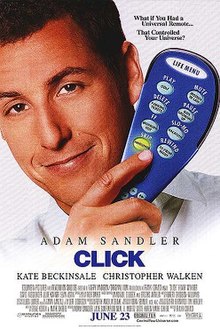
Now, who among us hasn't wanted to slow down reality at some point? So the idea seems to make a great deal of sense, on the surface, at least. And it seems to summon up those fantasies of having some sort of universal remote control where you can hit the pause button and the world around you freezes.  You know, like the Adam Sandler movie, Click, although that is more about fast forward and rewind functions.
 
And then there was Clockstoppers, where the effect is a function of moving at superspeed.  That was a somewhat innocent version of the fantasy.  A more mature, albeit in certain ways immature exploration of the fantasy was the independent film, Cashback.  

But this invention is about reality, not fantasy. Or reality in a virtual, augmented, or simply altered sense. 

Look, there is nothing new about using technology to give us a view of reality that was previously unobtainable.  Think telescope and binoculars, think microscope and magnifying glasses. And prisms and kaleidoscopes, for that matter.  Not to mention the old mirror, mirror, on the wall. McLuhan stressed the idea that media are extensions of the senses that altered our modes of perception.

And for more traditional categories of media, the camera and photography gives us the close-up, and make that point-of-view commonplace. And if you think about it, it's a way of seeing that is impossible for the naked eye–if you got that close to something, you would be unable to focus. Of course, it is intrinsic to the very nature of photography that it captures a frozen moment in time, a snapshot of reality. And after photography comes the moving image, which adds slow motion and fast motion to our repertoire of unreal realities.

So now, let's take a look at the next step in time distortion.  Let me start with the write-up in DVICE:


Now, if you're thinking what I'm thinking, then words like, uh-oh, or huh??? are running through your head. This certainly doesn't look very advantageous, or like it would be much fun, does it? Well, let's get the rest of the brief write-up from DVICE:

Of course, crossing the street in a traffic-filled city with this thing on wouldn't be a good idea, but in almost any other controlled, assistant-guided situation, this device could deliver an amazing slo-mo vision of reality that has never been seen before. 


Potthast makes no mention of the software facilitating the device's functions, nor if he has any plans to take it commercial, but in the meantime you can see the Decelerator Helmet in action in the video below.

 Okay, so there's an admission that this doesn't seem like the most practical product in the world. But let's take a look at the video and see it in action:


And here's the write-up from Vimeo:

The Decelerator Helmet is a experimental approach for dealing with our fast moving society. The sense of vision is consigned to an apparatus which allows the user a perception of the world in slow motion.

In a increasingly hectic, overstimulated and restless environment are the calls for deceleration omnipresent. The inconceivably amount of information and influences in our everyday lives leads in many cases to an excessive demand.The idea to decouple the personal perception from the natural timing enables the user to become aware of his own time.

I'm just going to interject here that this is an interesting idea, and a worthy enough goal, but is the answer more technology? Or might it be alternatives like meditation, prayer, and/or going for a walk?  But of course I'm being silly, so let's return to that write-up from Vimeo:

In the inside of the helmet the video-signal of a camera is processed by a small computer. The slowed-down images are displayed right before the user's eyes via a head-mounted display and are simultaneously shown on a monitor on the outside. The helmet has three different modes which can be selected by a remote control: In the auto-mode time is slowed down automatically and re-accelerated after a defined interval. The press-mode allows the specific deceleration of time. In the scroll-mode the user can completely control the speed of the elapsing of time. The Decelerator gives the user the possibility to reflect about the flow of time in general and about the relation between sensory perception, environment and corporality in particular. Also it dramatically visualizes how slowing down can potentially cause a loss of the present.

Well, if you want to see some more pictures of this device, and read more about it (if you can read German), go check out the website.

As for me, this puts me in mind of an old hit song from my childhood in the 60s, The 59th Street Bridge Song, aka Feelin' Groovy, by Simon and Garfunkel.  Those were slower, more relaxed times, and I do remember my father driving us over the 59th Street Bridge as we traveled from our home in Queens (not far from where Simon and Garfunkel grew up), to Manhattan and back. And when I was in high school, I crossed that bridge when I came to it a couple of times on foot, as part of some marathon walks with my old friend, Marty Friedman. 

Much time has passed since those days, a lot of water under the bridge you might say, but it's nice to know that old Paul and Art can still sing it nice and tuneful:


And I know you wanted to see the lyrics, so here they are: 

Slow down, you move too fast.
You got to make the morning last.
Just kicking down the cobble stones.
Looking for fun and feelin' groovy.

Hello lamppost,
What cha knowing?
I've come to watch your flowers growing.
Ain't cha got no rhymes for me?
Doot-in' doo-doo,
Feelin' groovy.

Got no deeds to do,
No promises to keep.
I'm dappled and drowsy and ready to sleep.
Let the morning time drop all its petals on me.
Life, I love you,
All is groovy.  

Groovy sounds real old-fashioned now, I know, and it wasn't long before it became a cliché and fell out of favor. But it was very much a musical and technological metaphor, a reference to vinyl records whose grooves captured the vibrations or vibes that reproduced those groovy tunes for us to listen to. So, just go ahead and decelerate, and dig those grooves, man, dig those grooves... 


Saturday, November 17, 2012

The Good, The Bad, and The Ugly of TV News

I was recently interviewed by Palash R. Ghosh of the International Business Times about the present state of broadcast journalism and cable news networks, and the interview appeared online on November 10th under the title of TV Broadcast News: The Good, The Bad, And The Ugly.  As you may have guessed, you can click on that title, and the link will take you to the article over on the IBT website, or just stick around and I'll share it with you here, as I am wont to (and as I want to do as well).

The article begins with the following introduction from Mr. Ghosh:

Superstorm Sandy brought to the fore the efficacy and immediacy provided by local television news stations. For millions of homebound New Yorkers -- those whose electrical service did not vanish -- the local TV outlets afforded gripping accounts of the unfolding disaster and its overwhelming impact on residents.

However, TV broadcast journalism has many problems: Given that news outlets must depend on ratings and advertising revenue, news programs frequently focus on trivial subjects (entertainment, fashion, etc.) or deliver simplistic, superficial accounts of complex topics like crime, health care, poverty, unemployment, and war.
International Business Times spoke with an expert on mass media to discuss the current state of TV broadcast journalism.
Lance Strate is professor of communication and media studies and director of the professional studies in new media program at Fordham University in New York.

IBTimes: TV news broadcast stations are purely commercial enterprises that are driven by ratings. Do you think this is why "broadcast journalism" has become so degraded and "dumbed down"?
Lance Strate: The increasing emphasis on profits certainly exacerbates the declining quality of broadcast journalism, along with the deregulation of broadcasting that was instituted under the administration of former President Ronald Reagan, and the concomitant loss of a commitment to social responsibility on the part of media corporations.
But the fundamental problem is that the medium of television, broadcast and cable, stress immediacy and imagery, rather than careful statement of fact, in-depth analysis, and thoughtful verbal dialogue.
The broadcast news adage, "if it bleeds, it leads," sums up the emphasis on exciting visuals that captures the viewers' attention, as opposed to making determinations based on the significance and seriousness of the content.
And in the absence of dramatic footage, drama can be generated by heated exchanges between individuals, because television also favors the close-up, and puts a premium on nonverbal expression, so the cool, calm demeanor of the news anchor conveys credibility, while the pundits provide an agonistic appeal akin to boxing matches.
The medium of television is designed to deliver information quickly, instantaneously, and in favoring the rapid it ends up giving us the vapid. And the medium of television is designed to be watched, to give us visual stimulation, dramatic scenes that stimulate the emotions rather than the intellect, in contrast to print media which require a great deal of cognitive effort to decode and interpret.

IBT: Women reporters and newsreaders on TV are almost all physically attractive and slender -- some are even stunningly beautiful. Are they hired principally for their looks (as women are in the worlds of fashion and entertainment)?
Strate: Just as photography gave us the idea of being photogenic, television gives us the concept of being telegenic, which is similar but not exactly the same.
It is clear that individuals who appear on television tend to be attractive to viewers, and if not attractive, have a distinctive appearance that viewers find appealing in some way.
Coming across well on camera should not be equated with being attractive in real life, however, as some physical characteristics are over-emphasized. For example, television personalities often have larger-than-average heads in relation to their bodies, which plays well on the screen.
When it comes to television news, there are exceptions, but there is a tendency to favor a certain look, attractive but not too attractive, because even if they are just reading the news off of a teleprompter, they need to be taken seriously. This is especially true for local broadcast news, while on cable broadcasts Fox News has pushed the envelope in their emphasis on very attractive, typically blonde, conservative news personalities. Broadcasters will say that all of their journalists are qualified, and being presentable on the air is simply an added requirement of the job, but I think it is safe to say that once the minimum requirements are met, say an undergraduate degree in journalism or communication, employment comes down to looks and personality.

IBT: One sees very few women who are overweight or middle-age. Are such women "banned" from TV news broadcasts?
Strate: To say they are "banned" is perhaps too strong a word, but they are certainly not favored.

IBT: Men seem to fare better -- there are quite a number of older (and unattractive) males on news broadcasts. Or are they also increasingly hired primarily on looks, too?
Strate: This reflects our cultural notions on what constitutes “attractiveness.” Men have traditionally had the advantage of being seen as distinguished as they age, but male newscasters still tend to be handsome, or at least clean-cut, since they are provided with proper attire and immaculate hair styling.
And while men have it easier than women in the looks department, how many men on news programs can you think of who have a high-pitched voice? Broadcasters favor the baritone to convey seriousness for anchors, reporters, and analysts.

IBT: Are the ratings of these shows driven by the popularity and attractiveness of the anchors and reporters?
Strate: Yes, to an extent, but it's a tricky business. Look at the failure of Katie Couric as a network news anchor. Being “perky” is fine for a morning show that mixes news and entertainment, and perhaps for a special correspondent, but she lacked the credibility and gravitas we look for in an anchor, and it is important to understand that credibility and gravitas are dramatic qualities, relating to presentation of oneself on the audio-visual medium, a performance attribute that again brings us back to looks and personality, with the need to fit into a certain character type or role.
We can relate anchors and reporters to the host of talk shows and their associates, so popularity is based in part on those elements, and in part on the content that they are able to summon up in their roles and within their programs.

IBT: Back in the halcyon days of Walter Cronkite and Edward R. Murrow, did they not also have to worry about ratings? Or did they just focus on delivering serious, hard news?
Strate: Ratings were never entirely irrelevant, but news was seen as a public service, necessarily fulfilling [Federal Communications Commission] requirements, but also the media moguls of that time like [NBC chief David] Sarnoff and [CBS boss William] Paley had a sense of pride in delivering a certain quality of journalism.
But tensions over ratings did exist back then, along with pressure from advertisers, and from government.

IBT: One sees a good number of ethnic minorities (blacks, Hispanics, Asians) on New York news stations. Are they hired according to a "quota system"? If so, do you view them as window-dressing"?
Strate: Maybe not a strict "quota system," but there is an idea of presenting a certain mix. Some time ago, it shifted from the emphasis on male anchors to a news team consisting of an older, distinguished-looking man and a younger, attractive woman, creating a sense of family, with the sports and weather reporters being the "playful kids.
More recently, the preferred mix emphasizes racial diversity, and news programs were for a long time the only place on television where you would see Asians, often Asian women, who provided racial diversity while playing off of the stereotype of Asians as being “serious and intelligent.”
Overall, there is an almost democratic notion of having the on air mix be representative of the audience's demographics, but, of course, that is fundamentally impossible to obtain.

IBT: When a major story breaks (Hurricane Sandy, Hurricane Katrina, 9-11 attacks, Iraq invasion, etc.) news stations are forced to cover it and refrain from their usual lightweight/entertainment subjects. Does this, in a way, hurt their ratings and advertising revenues?
Strate: For cable news stations, major events increase their ratings, which will help with advertising revenues on the whole. When there is real news, especially news that affects us, and when there is great uncertainty about what is going on, people will turn to news programming.
However, when nothing is going on, viewers will choose entertainment programs-- consequently, news channels are forced to "manufacture" news through interviews, talk, discussion, etc. This is what Daniel Boorstin referred to as “pseudo-events” in his book, The Image.
And they will try to present this manufactured "news" in a format that is entertaining, which has the effect of trivializing serious discourse, as Neil Postman argued in Amusing Ourselves to Death.

IBT: I have noticed something very peculiar -- almost no one on any New York news stations has a "New York accent. Rather, they all speak in what I would call a flat, broad, Midwestern accent. Even down South, very few TV news-readers have a "Southern accent"! Is this done on purpose? What's the point of "diversity" if everyone talks and sounds the same?
Strate: That's a longstanding practice -- the elimination or at least minimization of regional accents in broadcasting. When you are trying to reach the largest possible audience, you want to eliminate any hint of the local and regional.
A "New York accent" or a "Southern drawl would only be played for comedy under these conditions. But it also reflects the decline of regional accents generally, which is a result of great mobility, especially more migration to the south and southwest. But what counts as "diversity" on television is not the sound, but the look, because television is a visual medium.
And given a visual bias, television favors a diverse set of attractive faces to gain the attention of its audience.
There is an interesting subtle message here, though, that there may be differences in the way we look, but that acoustically we are all Americans.

IBT: Do you think the quality of TV news broadcasting will continue to get worse?
Strate: Yes and no. As what we call television expands into an ever larger array of channels, it has opened the door to greater political bias, first with Fox News becoming the voice of conservative Republicans, and then with MSNBC becoming its mirror image on behalf of liberal Democrats.
I think we can look for further diversity of politically oriented news channels, and more specialized channels in the sense that we already have several channels devoted to business news, sports news, and the weather.
But this may also allow for one or more networks to reclaim the mantle of objectivity in reporting, and to some degree of in-depth coverage.
I believe there will be a market for high-quality journalism on television, although it may be confined to elite and highly educated audiences, much like the audiences for PBS.
Overall, though, objectivity in journalism was born out of print culture, and it is dying along with it, we're seeing a return to an electronic version of the partisan press, and in audiovisual formats sensationalism and personality will continue to dominate, while an elite minority will turn to text-based news sources for a better source of fact and opinion.

And that's my news about the news, but no doubt you already knew it!