Monday, March 4, 2013

Of Patterns and Parabolas

So, I've been thinking a bit about formal cause, thinking inspired by the book by Marshall and Eric McLuhan, Media and Formal Cause, which I've discussed here before, notably in a post entitled, appropriately enough,  Media and Formal Cause, and do note that the book can be ordered directly from Amazon by one of those widgets over on the right.

So, anyway, not too long ago I completed an essay on the subject for a book project I'm working on with fellow media ecologists Robert K. Logan and Corey Anton, and I'll share more about the project here when the time comes, which it hasn't, not yet. And I'm not going to post the essay here, sorry about that, but I did want to share some thoughts.

One aspect of formal cause involves pattern recognition, a mode of perception and way of knowing that Marshall McLuhan stresses in Understanding Media.  Pattern recognition is especially needed, McLuhan argues, with the speeding up of communications, because it becomes harder and harder to engage in linear and analytical, step-by-step thought processes. When information is coming at you rapidly, there's no time to think things over, and you have to employ a different, more intuitive or right-brained, holistic form of perception. 

In my own experience, playing first generation video games like Space Invaders, Missile Command, and Galaxian helped me to fully understand pattern recognition as it relates to electronic media. It's the idea of being immersed inside an environment, rather than objectively distanced from a scene, which corresponds to McLuhan's notions of acoustic space (which surrounds us) and visual space (in which we are an outsider looking in).


Pattern recognition is holistic, in playing video games it meant not focusing on a fixed point the way we use our eyes when we read, but rather scanning the environment, almost in the mode of peripheral vision. And even at slower speeds, it's the kind of approach used by skilled chess players, as opposed to the brute force of computation that chess programs rely on, running through all the possible moves at inhuman speeds (which is why philosophers say that computers don't really play chess—which is to say, computers are cheaters, at least that's the answer that was given when philosopher Hubert Dreyfus's claim that no computer could play a decent game was chess back in the 60s was shown to be in error by Seymour Papert, as Dreyfus was soundly beaten by a computer).

Pattern recognition relates to formal cause in that the pattern or form is recognized by the individual, and therefore in the eye of the beholder. In the most modest sense, the individual applies the pattern to sensory data in order to make sense of what is being taken in, and that active  organization can be considered a kind of causality. To use a phrase favored by Gregory Bateson, as well as Edmund Carpenter, we're talking about the pattern that connects, or to invoke Bateson's famous quote:


What pattern connects the crab to the lobster and the orchid to the primrose and all the four of them to me? And me to you? And all the six of us to the amoeba in one direction and to the back-ward schizophrenic in another?

Bateson also used the term metapatterns to talk about patterns that recur across many different contexts, and this became the subject of Tyler Volk's fascinating book, entitled, appropriately enough, Metapatterns.  According to Bateson,


The pattern which connects is a metapattern. It is a pattern of patterns. It is that metapattern which defines the vast generalization that, indeed, it is patterns which connect. 

And according to Volk,


A metapattern is a pattern so wide-flung that it appears throughout the spectrum of reality: in clouds, rivers, and planets; in cells, organisms, and ecosystems; in art, architecture, and politics.

Volk, in his book, discusses patterns that occur in space, such as spheres, sheets and tubes, borders, binaries, centers, and layers, and also in time, such as calendars, arrows, breaks, and cycles. 

So now, connecting Bateson with McLuhan, I am arguing that formal cause can best be understood as patterns that direct. That is to say, patterns are not just effects, but that there is a tendency for things in the universe to fall into certain patterns, based on physical laws, not the least of which is the Second Law of Thermodynamics which establishes the ultimate triumph of entropy. The tendency of material phenomena to fall into certain patterns, even as they move towards increasing chaos, is also discussed in very insightful fashion in Terrence Deacon's recent book, Incomplete Nature: How Mind Emerged from Matter, and Deacon does relate that tendency to formal cause.

In this sense, forms are real, not in the ideal sense that Plato thought them to be, but in a dynamic sense as patterns associated with events. Entropy itself is a pattern that directs.

Now, in another previous post, They Became What They Beheld, I brought up the wonderful videos of Vi Hart, and in particular one inspired by Edmund Carpenter. This time I want to introduce another video of hers entitled Doodling in Math Class: Connecting Dots, which she describes as "anti-parabola propaganda, plus musing on math class, cardioids, connect the dots, envelopes of lines, even a bit of origami." It's really quite marvelous, so please take a look:


Now, Vi only emphasizes the many ways that we can encounter parabolas and their cousins in mathematics, but what also emerges is that this is a great example of a metapattern, or pattern that directs, as it relates to gravity, ballistics (Angry Birds style or otherwise), seashells and other biological forms, not to mention planetary orbits.  

Vi Hart is, in my opinion, the contemporary equivalent of Hypatia, the 4th century Greek philosopher, mathematician, and astronomer who, remarkably for her time, became head of the neo-Platonist school in Alexandria. She was the subject of the 2009 film, Agora, which I was very impressed with:


The trailer doesn't do the film justice, focusing as it does on action and conflict, which is a part of the story, and indeed much of the emphasis is on early Christianity's intolerance of Greek paganism and the philosophy associated with it, resulting in Hypatia's murder or execution. 

But for me a key theme in the film was Hypatia's attempts to understand the movements of the planets, trying to reconcile the conflict between the assumption that the planets would follow the perfect form of the circle, and the reality that their movements do not. The film speculates that she arrived at the answer of the ellipse, but never had a chance to relate her realization before her death.


The relationship among circles, ellipses, parabolas, and hyperbolas were first explored by the ancient Greeks, with the understanding that all are conic sections, as illustrated above (and as shown in Agora). That these patterns in geometry represent patterns that different physical phenomena fall into is, in my view, a form of formal cause, and an example of patterns that direct.


Now excuse me while I go play with some parabolas on my phone...


Tuesday, February 26, 2013

The Science and Scientology of Sponsored Content

So, Alfred Korzybski published his magnum opus on general semantics in 1933 under the title of Science and Sanity,  because he believed that scientific method gives us our best understanding of the world, our most accurate maps, as it were, of a territory that we can only really know indirectly. As a scientific approach to mental health, education, and social, political, economic, and ethical progress, general semantics caught the imagination of many science fiction writers, among them Robert Heinlein, Frank Herbert, and A. E. van Vogt.  As a form of quasi-therapy, general semantics influenced a number of significant therapists, including Albert Ellis, Fritz Perls, and Albert Bandler of Neuro-Linguistic Programming fame.

Another well known figure who credited Korzybski and general semantics with having had an important impact on his thinking was L. Ron Hubbard.  Understandably, many individuals associated with general semantics do not want to be associated with Hubbard, or have general semantics be connected to him in any way. And arguably, whatever Hubbard took from Korzybski he didn't use in a way that Korzybski intended or would have approved of.

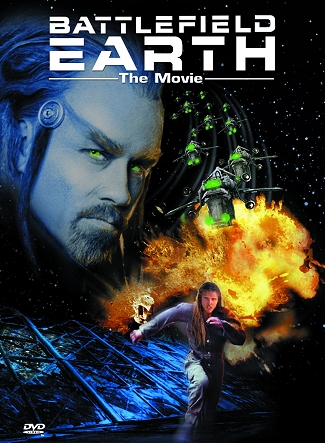
But Hubbard was, early on, a science fiction writer. I haven't read his books, I must confess, but I did see the one movie that was made based on his work. It wasn't very good, but John Travolta was quite amusing, unintentionally of course, as an alien:


Now that's what I call Saturday Night Fever!

Anyway, Hubbard eventually shifted his focus from fiction to psychotherapy (well, some say he never shifted his focus away from fiction, but that's another matter). That's when he came up with his own brand of therapy, called Dianetics. That link will take you over to the Wikipedia entry, where it says:


When Hubbard formulated Dianetics, he described it as "a mix of Western technology and Oriental philosophy". He said that Dianetics "forms a bridge between" cybernetics and General Semantics (a set of ideas about education originated by Alfred Korzybski, which received much attention in the science fiction world in the 1940s)—a claim denied by scholars of General Semantics, including S. I. Hayakawa, who expressed strong criticism of Dianetics as early as 1951.

Be that as it may, after coming up with his Dianetics, Hubbard went on to create Scientology, and note the link here between Science and Sanity, science fiction, and Scientology as a belief system. And as you no doubt know, Hubbard established Scientology as a religion, founding the Church of Scientology in 1953. It's a religion that has been embraced by a number of celebrities, and quoting now from the Wikipedia entry on the Church, here's the section on celebrities:


Hubbard envisaged that celebrities would have a key role to play in the dissemination of Scientology, and in 1955 launched Project Celebrity, creating a list of 63 famous people that he asked his followers to target for conversion to Scientology. Former silent-screen star Gloria Swanson and jazz pianist Dave Brubeck were among the earliest celebrities attracted to Hubbard's teachings.


Today, Scientology operates eight churches that are designated Celebrity Centers, the largest of these being the one in Hollywood. Celebrity Centers are open to the general public, but are primarily designed to minister to celebrity Scientologists. Entertainers such as John Travolta, Kirstie Alley, Lisa Marie Presley, Nancy Cartwright, Jason Lee, Isaac Hayes, Edgar Winter, Tom Cruise, Chick Corea and Leah Remini have generated considerable publicity for Scientology.

Now I don't know about you, but I was a bit surprised when, while watching the Superbowl a few weeks ago, this commercial popped up:


According to a piece by Cavan Sieczkowski in the Huffington Post entitled Church Of Scientology Super Bowl Ad Raises Eyebrows, the Church did not actually buy a Superbowl ad, the most expensive of all possible commercial placements. A small portion of advertising time is reserved for the local and regional stations running the Superbowl network feed, and the Church bought time on the stations in a few major markets, including New York and Los Angeles, a much cheaper proposition, but one that gave the impression that they were willing and able to afford the highest advertising rates in the universe. Sieczkowski goes on to relate the following:


This is the second time in recent weeks a Scientology ad has broken into the mainstream media.

In mid-January, the Atlantic published promotional, sponsored content by the Church of Scientology detailing how the church's “ecclesiastical leader,” David Miscavige, had led it to its best year yet. The advertorial package was denounced by readers, and the Atlantic promptly removed the post after receiving a wave of backlash. 

 And this brings me to the point that got me onto this topic in the first place. In a story over on gawker.com, with a headline of The Atlantic Is Now Publishing Bizarre, Blatant Scientology Propaganda as ‘Sponsored Content’, Taylor Berman wrote


The Atlantic –- the one time publisher of Mark Twain, Nathaniel Hawthorne and Edith Wharton –- is now publishing Scientology propaganda. The "sponsored content", bought and paid for by the Church of Scientology, went up Monday around noon and features all sorts of breathless praise for Scientology and its alleged growth last year.
 
The post—an example of the kind of advertising many publishers are turning to as display ad revenue stagnates—is basically one long tribute to David Miscavige, the "ecclesiastical leader of the Scientology religion":

 And here, Berman provides a quote from the sponsored article in The Atlantic:


Mr. Miscavige is unrelenting in his work for millions of parishioners and the cities served by Scientology Churches. He has led a renaissance for the religion itself, while driving worldwide programs to serve communities through Church-sponsored social and humanitarian initiatives.

Berman goes on to note that the article focues "on Miscavige's plans to expand the religion's already existing churches" and adds another quote from The Atlantic:


David Miscavige spearheaded a program to build every Church of Scientology into what Scientology Founder L. Ron Hubbard termed "Ideal Organizations" (Ideal Orgs). This new breed of Church is ideal in location, design, quality of religious services and social betterment programs. Each is uniquely configured to accommodate the full array of Scientology services for both parishioners and the surrounding community. Ideal Orgs further house extensive public information multimedia displays that introduce every facet of Dianetics and Scientology, along with libraries, course and seminar rooms for an introduction to and study of Scientology Scripture. Chapels serve to host Sunday Services and other congregational gatherings.

It is from these Ideal Churches that Scientologists extend their humanitarian programs to mitigate intolerance, illiteracy, immorality and drug abuse.
And Berman then adds


The post then lists the "unprecedented 12 Ideal Scientology Churches" built around the world last year, including locations in Germany, California, Italy and Israel, with accompanying pictures of each opening's celebration.

And let's not forget the comments. Of the 17 comments posted as of this writing, 11 are so pro-Scientology they read as though they're an extension of the original post. A bold, proud day for The Atlantic and its fine history of journalistic excellence.


Well, it is not surprising that The Atlantic removed the piece, given this sort of scathing criticism. Berman's critique ends with the following update:


The Atlantic took down the post, writing: "We have temporarily suspended this advertising campaign pending a review of our policies that govern sponsor content and subsequent comment threads."


In a story that appeared in Business Insider, Jim Edwards explains


A lot of magazines sell sponsored content to advertisers. (Business Insider has several sponsored content series running right now, for instance.) The usual rule is that such stories must be clearly labeled so that readers can see whether editorial may have been influenced by advertisers. Normally, however, both the publisher and the advertiser try to make the content credible or useful in some way, because readers can spot blatant propaganda a mile away -- and that's of no use to anyone.

Blatant propaganda, however, is exactly what The Atlantic appears to have published. The article, titled "David Miscavige Leads Scientology to Milestone Year," was an encomium to the the "ecclesiastical" leader of the church and his many accomplishments (which mostly include buying old buildings and turning them into new churches, according to the article).

The Atlantic is a highbrow magazine known for it famous writers and agenda-shaping journalism. This, decidedly, was not it.
So now for the good part. A journalist by the name of Mike Daly writes for an online news site by the name of Adotas, described as where interactive advertising begins, and Mike's bio goes like this:


Mike Daly is an award-winning writer and editor with nearly 30 years of experience in publishing. He began his career in 1983 at The News of Paterson, N.J., a long-since defunct daily paper, where at age 22 he was promoted to the position of Editorial Page Editor. Since then he has served in managerial capacities with several news organizations, including Arts Weekly Inc. and North Jersey Media Group in New Jersey and Examiner Media in New York. His work has been honored on numerous occasions by the New Jersey Press Association and the Society for Professional Journalists.
So he's the real deal.  And Daly does a feature on Adotas called Today's Burning Question, and on January 18th the burning question was, "What can be learned from The Atlantic’s Scientology Sponsored Story debacle?" He then collects answers from industry contacts, which in this case includes


  • Ari Brandt, CEO of MediaBrix 
  • Dave Martin, SVP, Media at Ignited 
  • Ari Jacoby, CEO of Solve Media 
  • Richard Spalding, CEO, The 7th Chamber 
  • Laney Whitcanack, EVP of Conversational Marketing at Federated Media Publishing 
  • David E. Johnson, CEO, Strategic Vision, LLC 
  • and me

And if you want to read all of the replies, especially of these other folks, by all means, go check it out over at Adotas, under the heading of Today’s Burning Question: The Atlantic’s Sponsored Scientology Story Debacle.  But for my quote alone, well, you know it's gotta make an appearance here on Blog Time Passing:


“The Atlantic’s embarrassed retraction of sponsored content serves as a reminder that the established ways of doing business for traditional media industries are no longer working. When print media dominated, it was easy to specialize and compartmentalize content and operations, leading to the journalistic ideal of strict separation between advertising and news, and more generally between financial considerations and editorial judgment, often invoked metaphorically as “church and state”. The public relations industry sought to scale the walls by providing ready-made content for news media, for example in the form of press releases, but this content was typically offered free of charge and taken up by news media free of charge. For this reason, public relations professionals were previously viewed with great suspicion by journalists and advertisers alike, but today emerge as having superior ethics overall than many news and advertising professionals. As electronic media came to dominate the culture, beginning with broadcasting, but more fully with the Internet, we’ve seen the boundaries between different types of content blurring in many different areas, such as docudrama, edutainment, infomercials, advertorials, and product placement in motion pictures and television programming. And online, the boundaries grow even fuzzier, as it is often not clear whether the source of a particular blog or YouTube video is a private individual, organization, or business. Digital technologies have presented new challenges to advertising that have led to efforts to break out of the compartment of a labeled advertisement, as it becomes easier and easier for audiences to ignore that type of content, while the same technologies have severely undermined the business model of periodicals such as The Atlantic, so both of these traditional media industries are struggling financially, and sponsored content must seem like a marriage made in heaven. What they failed to take into account is that in the electronic media environment, there are intrinsic values that differ from those of the print media environment. Print media favored content, facts, logical structure and organization. Electronic media favor transparency, honesty, self-disclosure, and a sense of genuineness in the presentation of real personality and appearance. Much of what is valued in the electronic media environment was missing in the way that The Atlantic presented Scientology’s sponsored content, and so the content and the sources were immediately rejected and ridiculed by audiences, and this can have a negative effect on the reputations of the magazine, and possibly the sponsor as well.” — Dr. Lance Strate, Professor of Communication and Media Studies and Director of the Professional Studies in New Media program at Fordham University.

Now, that is rather long winded, I must admit, and it is the longest of the responses. How it stacks up to the others I leave up to you to judge. One thing is certain, however, and that is that the science of sponsored content has a long way to go yet before it reaches a state of sanity, and that the new media environment is very unforgiving of maps that mislead us about the territory they are supposed to represent.


Monday, February 4, 2013

An i for an Eye

I have been fascinated with the development of augmented reality technology (see, for example, my previous post, The New Hyperreality ), and believe that it will play an increasingly more important role for the future of new media. Here's a video from a news report that I haven't included in any previous post. It's a few years old now, but gets across the basic idea:


And yes, I agree with this report, it seems quite clear to me that hands-free is the most effective mode for using AR, rather than looking through your cell phone's camera, just as we tend to favor bluetooth headphones or ear pieces over holding the phone up to your ear. So this suggests AR goggles will be very big at some point in the near future. Now, here is Nokia's projection of a future development of a hand's free visual display, Nokia future vision:


The eyewear is a substitute for a screen in this instance, as opposed to at true form of AR where the actual world we're looking at is augmented by electronic data. A more complete picture is presented in Google's vision for the future, called Project Glass: One Day...:


And here's the write-up  on it:

We believe technology should work for you — to be there when you need it and get out of your way when you don't.

A team within our Google[x] group started Project Glass to build this kind of technology, one that helps you explore and share your world, putting you back in the moment.

Follow along with us at http://g.co/projectglass as we share some of our ideas and stories. We'd love to hear yours, too. What would you like to see from Project Glass?

Now here's one of their follow-up videos, Project Glass: Skydiving Demo at Google I/O 2012:


To be honest, I can't imagine going skydiving myself, and this seems somewhat less ambitious than the previous video, simply a matter of adding a video camera to the glasses to record whatever it is you're looking at. This also seems to be the case for this other video from Google, Glass Session: Madame & Bébé Gayno:


Using the glasses for a live streaming video chat, specifically a Google Hangout, adds something new to the mix, admittedly, and makes sense in this context. But for a regular video call, such as you might do via Skype, I guess you'd have to look in the mirror, a technique used in this next video, DVF [through Glass]:


 You can see that, in this case, the glasses provided raw footage which was later edited. Here's the write-up:

Experience the DVF Spring 2013 show at New York Fashion Week through the eyes of the people who made it happen—the stylists, the models and Diane von Furstenberg herself. All the footage you see here was filmed using only Glass, Google's latest technology that lets you capture moments from a unique, new perspective. See what happens when fashion and technology come together like you've never seen before.


So, yeah, it all seems pretty cool, especially if you want to document your life, an idea that began with written diaries during the print era, became increasingly more visual with the addition of photography, especially as cameras were made increasingly more accessible and portable, and continued with the introduction of home movies, home video cameras, and now blogging, tweeting, social media profiles, status updates, Instagram and the like. So this is just one more step in creating a complete record of everything we say and do, and see.

But this is a far cry for the AR depicted in the first video, and that's because those much more sophisticated Google glasses are just an idea for now, and the video does not depict an actual technology.  But here's one that's much closer to realization, iOptik - a glimpse into the future -vers 1.1:


And here's their write-up:

Innovega's wearable transparent heads-up display, enabled by iOptik contact lens technology, delivers mega-pixel content with a panoramic field-of-view. This high-performance and stylish eyewear is perfectly suited for the enjoyment of immersive personal media. The first part of the video is a CGI compilation provided by CONNECT, San Diego and the second part is actual footage through our system.

One big problem that none of the videos I've included here so far makes clear is that there are limitations to what the human eye can focus on at very close range, so it may not be possible to simply have AR glasses that work in the way depicted. Remember that with AR on mobile devices, the devices are held at a much farther distance from the eye than glasses are.  This is a key point that Evan Ackerman discusses in an article on the DVICE website.  And according to Ackerman,

The way Innovega gets around this problem is by modifying your eyeballs to focus much, much closer. Innovega has developed a special contact lens called iOptik that is completely transparent, except that it can refocus polarized light (like the light from a display) so that you have no problems seeing it. And it's not an either-or thing: with the contact lenses in, the world looks completely normal, except that you can suddenly see a high resolution display that's projected on a pair of glasses, superimposed transparently across up to 120 degrees of your field of view.

Ackerman also notes that while Google glasses have a long way to go, Innovega's innovation may be ready roll out later this year. For a more technical explanation, here's Randall Sprague, CTO of Innovega, in a video called I Can See for Inches and Miles:


As well, this iOptikCameraDemo video provides a somewhat dry, technical, but revealing demonstration of the technology as it interacts with human vision:


What's also quite interesting are the markets listed by Innovega for its optical technology. They include augmented reality, of course, interfacing with mobile devices, and immersive video and 3D gaming, and also simulation and training, which makes sense. What may give some folks pause is that their list of markets also includes "defense and covert operations" and "field operations for warfighters," but if you think about it, this should not be surprising, as all of new media, and communication technologies in general, have military applications. What is quite valuable in human terms, especially given our longer lifespans and aging population, is the market for low vision. This technology will be a great boon for those suffering from Macular degeneration, and similar problems.

One further question comes to mind, from a media ecology angle. McLuhan argues that changing the way we use our senses changes our sensibility, our thought processes, and ultimately our culture and social organization. And recent research backs him up by showing that reading, along with other types of media, actually rewire the brain. So how will this new technology affect our sense ratios, the balance of our senses, and our outlook on the world, individually and collectively? This could be the most radical shift in vision since the introduction of reading itself!


Saturday, February 2, 2013

Machine Gun Moloch

In a post back in June, Robert Priest, Dr. Poetry, and the Viral Verbal Vortex, I wrote about my friend Robert Priest, a poet and musician, and shared an essay I wrote about him for the online poetry and creative writing journal/magazine, Big Bridge, which was also entitled, "Robert Priest, Dr. Poetry, and the Viral Verbal Vortex". And in the essay, I included some discussion of his meme splices or meme switches, a technique he employs where he switches out similar sounding words in a series of familiar phrases and sayings, so that substituting splice for spice yields, "the splice of life," "the splice garden," and "the splice trade," for example. It's a great technique for poetry, humor, and also what in general semantics is referred to as consciousness of abstracting—in this instance by substituting one word for another, it makes us more aware and more critical of the meanings we attribute to the words we use.

And readers of Blog Time Passing are no doubt quite familiar with my views on gun violence and the second amendment by now. If not, or if you're in need of a refresher course, you can go back and read the following posts: You can start with What to Blame for the Colorado Shooting? from this past July, in response the Aurora movie theater shooting. And I shared a poem on the topic the following month, Second Amen Dementia. And then, in December, reacting to the unspeakable horror of the Sandy Hook Elementary School shooting, I posted On Guns and More, followed by Human Sacrifice and the False Idol of Firearms.  And in that last post, I included commentary from Rabbi Eric H. Yoffie on how gun worship is blasphemy, and from a leading Roman Catholic intellectual, on how guns have become the new, American Moloch (Moloch being the most despised of false gods in the bible, because his worshipers required that children be thrown into the fire as sacrifices to him).

And so, it occurred to me to apply Robert Priest's technique to the terms gun and god, as another way to express the idea that idolatry and blasphemy is alive and well in America, in the form of gun worship.  I posted the result on my poetry blog over on MySpace last month, and I thought I would share it here as well. I will leave you with this poem, rather than try to add some final concluding words to this post, as I feel that at the end of this piece, there really is nothing more to be said.


Machine Gun Moloch (A Meme Splice)


I am the Lord, thy Gun
I, the Lord thy Gun, am a jealous Gun
Thou shalt not take the name of the Lord thy Gun in vain
There is no Gun but Gun
To the greater glory of Gun!
In Gun we trust
Gun bless you
Gun is everywhere
You cannot hide from Gun
Do you believe in Gun?
Have faith in Gun
Praise be to Gun
Gun's will be done
Have you found Gun?
Pray to the almighty Gun
Our Gun and Gun of our fathers
May Gun bless you and keep you
May the face of Gun smile upon you
As Gun is my witness
It was an act of Gun
Gun damn you!
We are assured of victory for we have Gun on our side
He just thinks he's Gun's gift to us
Oh my Gun!
Have you heard Gun's voice?
Gun is our help and our savior
The law of Gun
Gun does not give you anything you cannot handle
Your arm's too short to box with Gun
Gun speaks to us
Gun wants us to worship Him
Gun demands our obedience
Give thanks to Gun
Can you feel the presence of Gun?
Walk with Gun
There but for the grace of Gun go I
Submit to Gun's judgment
Stand before Gun
Kneel before Gun
Approach Gun's altar
Know Gun's peace
Gun is just
Gun is love
Swear to Gun
So help me Gun!
It's in the hands of Gun
Await the kingdom of Gun
Gun willing!
For Gun's sake!
Honest to Gun!
Dear Gun!
Gun is a circle whose center is everywhere
If Gun did not exist, it would be necessary to invent Him
I believe in Gun even when He is silent
Man plans, Gun laughs
Oh for the love of Gun!
You must fight for your Gun-given rights
This will put the fear of Gun into you!
Why Gun? Why me?
One nation, under Gun


Monday, January 28, 2013

Television and Sports

With the Superbowl coming up this Sunday, it seems like the perfect time to air, er, I mean share the more recent interview with me conducted by Palash R. Ghosh for the International Business Times, the previous pieces having been blogged about here on old Blog Time Passing under the headings of Signs of the NY Times, The DC-Hollywood Connection, Cable News Left and Right, and The Good, The Bad, and The Ugly of TV News.

This latest round was published online on January 9th, with the title, US Sports And Television: A Marriage Made In Heaven And Hell, and you can click on the link and read it over there, or stick around and read it here:


The United States is a sports-mad country – professional and collegiate athletics generate billions of dollars annually, attracting tens of millions of devoted fans.

In a few weeks, the Super Bowl will be watched by more than 100 million people in the U.S. alone, while the NCAA "March Madness" tournament is almost as big an event.

Elite American athletes like Lebron James, Peyton Manning and Kobe Bryant are not only extravagantly compensated, but enjoy global acclaim and iconic status.

The extraordinary success and popularity of sports could not have reached such stratospheric levels without the support of television. Pro sports leagues sign billion-dollar contracts with the networks, guaranteeing huge windfalls for team owners, executives and, of course, the players themselves.

However, like other parts of mass media, sports broadcasting is facing some serious problems, including a fragmented market, the growing disillusion of fans tired of massive salaries paid to top stars and the rising threat posed by the Internet.

International Business Times spoke to a media expert to sort out the current state of sports broadcasting and journalism.

Dr. Lance Strate is professor of communication and media studies and director of the professional studies in new media program at Fordham University in New York City.

IB TIMES: U.S. pro and college sports are now a multibillion-dollar industry. Do pro clubs today generate the majority of their income from the TV money, rather than ticket sales and corporate sponsorships?

STRATE: Yes, broadcast and cable television revenues represent the main source of profit, supplemented by the licensing of merchandise. Actual attendance at the event has been of increasingly less importance to the business of professional sports over the past half century.

IB TIMES: ESPN emerged in the early 1980s, coincident with the appearance of cable news networks. How has ESPN changed the face and nature of American sports?

STRATE: ESPN has dramatically altered our relationship to sports in a number of ways. Sports broadcasting used to be limited to the time period surrounding the actual playing of a game, and to relatively brief reports on local news broadcasts.

ESPN gave us sports programming 24 hours a day, seven days a week. Increased quantity has intensified the interest in and the availability of sports, but also in some ways made athletics less special.

ESPN also represents a shift away from a local orientation to sports to a national, and sometimes international, perspective. Local broadcast stations would make deals with local teams, and thereby feature only the home team on a regular basis. Broadcast networks would present us with a revolving line-up for games of the week (and on special occasions like Thanksgiving), until shifting to whatever teams made it to the championship games in their respective sports.

Before television, there was a strong connection between teams and the communities that they were situated in. Broadcast television began to undermine that connection, and cable television in the form of ESPN has led to further deterioration of the local connection.

ESPN, as a network devoted to sports coverage, is able to offer much better quality television, a more professional and entertaining product, than the sports programming produced by local stations, so this reinforces the erosion of community in sports.

IB TIMES: Baseball was the most popular U.S. sport until the 1960s -- by the next decade NFL football rose to the No. 1 spot. Was this due primarily to televised NFL games?

STRATE: Absolutely. Baseball is a sport that translates poorly to television. If you try to show the entire field of play, you lose too much detail, and it's too hard to see what's going on. So instead, the tendency is to focus on a narrow part of the game, which is great if you know the game well, as you can see details about how pitchers and batters go about their business, but you lose the subtlety of fielders' movements behind the pitcher, base-runners taking leads, etc.

Baseball is a holistic game, and suffers when it is atomized in this way. Someone once commented that if you only watch baseball on TV, you'd think that the first baseman is always positioned on the first base bag, because they never show him fielding his position -- only when he's taking the throw to first, that's how misleading television coverage can be.

Of course, it's also a commonplace that television favors action, and baseball is too slow-moving for the TV audience. It's a game of strategy, a thinking game, which is why it worked so well before television became the dominant medium. It's a game that you can put into words, a literary game, and so not surprisingly baseball novels hold a significant place in American literature, and also was easy to capture in newspaper reports, and even in the verbal pictures painted by radio announcers.

Baseball is also a game of statistics, and in this respect as well newspapers played a significant role as a medium that printed batting averages, earned run averages, and the like, which readers could pore over at great length. Statistics do not, however, do well on the television screen. So, television undermined baseball's role in American culture, and replaced it with football, which was not all that popular a sport before the 1960s. But football could work well on television because the line of scrimmage requires only a narrow field of vision, one that the TV camera can easily capture, and once the ball is in motion, all that the camera needs to do is follow whoever is holding it, or wherever it's thrown, or kicked.

Even so, football did not become the national pastime until after the introduction of the videotape replay in the 1960s. As much as football is thought to be a game of action, the action tends to be relatively brief, with long periods of waiting in between. One study of an early Super Bowl game found that there was only about eight minutes in which the ball was actually in play. The instant replay allows the brief moments of action to be repeated several times, and from different angles, providing many times more action than is actually present during the game. Without it, football would not be that much more exciting than baseball.

IB TIMES: Television sports broadcasting did not really commence until 1950 or so, when millions of American households bought TV sets. In those days, was the revenue generated from TV negligible to the teams? What was the principal source of their income?

STRATE: At the start of the TV era, the main source of income for sports teams was generated at the stadium through ticket sales, supplemented by sales of food, merchandise, stadium advertising, etc. Without all of that television money, players' salaries were much lower, they lived in the community and were a part of the community, and owners themselves maintained a relationship with the community, they were beholden to the fans to a much greater extent than today.

IB TIMES: Has the TV sports market become saturated and cannibalized, given the plethora of stations, networks and games available? That is, are individual games losing their once-big audiences?

STRATE: All of the constant coverage certainly has diluted the value and significance of individual games. Fans themselves have become increasingly disillusioned with the games due to the enormous emphasis on profits, not to mention the many scandals, strikes, etc., that come up.

IB TIMES: Did regional sports networks, like YES in NY, NESN in Boston, and WGN in Chicago, arise because of this fractured market?

STRATE: As disillusioned as fans have become, there still is a local connection to sports teams, and cable provides the opening for increasingly more specialized programming, and channels. So if there are enough fans who would rather watch reruns of games played by their favorite teams from a few years or decades ago, rather than watching a live game played by teams they don't really care about, then a channel can be sustained that would cater to those fans.

This especially appeals to fans of a team that isn't doing well at present, but had winning seasons in the past. Nostalgia has always been a part of sports culture, and these channels are only beginning to exploit the possibilities of replaying past games from the archives.

IB TIMES: Are males between the ages of 18-49 still the target demography audience for sports programming? Or has that changed?

STRATE: The male demographic is still dominant in sports programming, but there is recognition of the increasing numbers of women in the audience. As is generally the case, there is a lag between demographic changes within the audience and adjustments in the programming to reflect those changes.

IB TIMES: Golf tournaments and tennis matches typically do not draw big ratings, but the top stars in these sports make huge money. Is this because they generally appeal to the affluent, thereby attracting blue-chip advertisers?

STRATE: It used to be said that the only reason golf tournaments were televised was because television executives play golf. That was before Tiger Woods, of course, but the fact remains that golf is not exactly the most attractive sport for television coverage. Tennis is more exciting to watch, and made a shift from elitist to popular mode several decades ago.

The advantage that both sports have is the emphasis on individual players, so that the most successful, and also the most attractive and distinctive individuals, can become celebrities, attract a great deal of attention, and this opens the door to advertising revenue, and not just for high-end products.

IB TIMES: Do the TV networks make a profit on sporting events in general? I recall the first year that the Fox television broadcast NFL football -- the network lost something like $350 million. How can they sustain losses like that?

STRATE: In general, yes, they make profits.

If networks could control the outcome of sporting events, they'd make sure that teams in major markets like New York City and Los Angeles always wound up in championship games, because viewership goes down when you have two teams from, say, Rust Belt cities.

When it comes to coverage of the Olympics, there's a need to determine what games to show on the network and what to relegate to cable channels, not to mention whether to show them live or taped if the games are held in another part of the world. But there is no question that in the long run having the broadcast rights is profitable, and helps the network in harder-to-quantify ways, for example, in promoting their television series during the Super Bowl and in simply providing the network with legitimacy, status, and prestige, as the NFL did for Fox.

IB TIMES: Has it come to a point where the TV networks influence how, when and where games are played? For example, forcing World Series games to be played on weeknights to maximize ratings, allowing for commercial breaks, expansion of playoffs so more games are played, etc.?

STRATE: That's been true for a while. As much as there has been criticism of the scheduling of games, weekday games are rare, and scheduling has shifted to accommodate national audiences, which moves the start time back on the East Coast.

And expanded leagues and the addition of playoffs also provide more television programming, and makes that programming more attractive to audiences.

IB TIMES: Boxing was a very big sport in the 1950s, but seems to have declined in popularity ever since. Nonetheless, top boxers receive huge money, although matches only appear on cable pay-per-view outlets. What generates such revenue?

STRATE: As special events, there is quite a bit of revenue generated by pay-per-view through a variety of outlets, and on an international scale through the rights to re-broadcast, made available through on-demand or download. Plus, there's money generated via advertising and promotion.

But it has been a long time since we've had the kind of superstar boxers that once dominated American sports like Muhammad Ali, Joe Frazier and George Foreman. As the public has come to realize the consequences of traumatic brain injuries, both boxing and football have become less appealing.

IB TIMES: In the 1950s, didn’t baseball club owners fear that televised games would discourage people from coming out to the ballpark and thereby hurt attendance and revenues? Did this indeed happen? Or did they realize that TV gave them unprecedented exposure to the public?

STRATE: The main thing is that television revenue made attendance increasingly less significant to the owners. As I mentioned before, television does a poor job of providing a sense of all that's going on during a baseball game, so the direct effect on attendance was nothing like what the owners' feared.

However, in undermining baseball's attraction, and creating audiences who were increasingly more impatient with the slow pace of the game, television damaged baseball's value irreparably. In response, owners, have turned the stadium experience into a kind of media frenzy, with jumbo screens constantly displaying images of the players, close-ups of the game, advertisements, and a variety of clips all in the attempt to keep attendees from being bored.

Paradoxically, this further devalues the game itself, and destroys the mentality, and concentration, needed to appreciate it.

IB TIMES: In the 1940s and 1950s, most baseball and football play-by-play broadcasters were employed by their respective radio and TV stations. Now, it seems they all work for the teams they cover. Why did this happen?

STRATE: At first, the live sporting event was the main business of sports teams, and broadcasters covered that event, as they might cover other types of events in reporting the news. As television revenue became the main source of profits for the teams, they came to realize that they were no longer in the business of creating live events, but in the business of producing television programming, not unlike a studio that produces a TV series.

With that understanding came the desire, and the need, to maintain complete creative control. When the stations employed the broadcasters, they were able to say things that are critical of the team or the management, but now they are part of the promotion of the team-as-programming.

And more recently, this has extended to the creation of cable channels, like YES by the New York Yankees, and SNY by the New York Mets. This is a bit of a reversal, as there was a time when some sports franchises were owned by broadcasters; for example, CBS owned the Yankees for about a decade before selling the team to George Steinbrenner in 1973.

IB TIMES: Howard Cosell is probably the most famous and controversial U.S. sportscaster in history. What impact did he have on the profession? And could Cosell -- with his homely looks, nasal voice and obnoxious personality -- be hired by a TV network today?

STRATE: Cosell made the television sportscaster into a celebrity, rivaling and sometimes eclipsing the athletes themselves. While there is no single individual with quite the same visibility as he enjoyed, individuals such as John Madden (whose celebrity extends to football videogames), and Bob Costas, who recently made waves by courageously commenting on gun violence during a football game, are Cosell's heirs.

But with so much money at stake in sports programming today, I'd doubt anyone could be as critical as Cosell was willing to be and survive. As for his looks and voice, he did have the advantage of being a distinctive personality that could play well as a supporting character on television, but you are probably right that today the tendency would be to put attractive individuals on screen, and Cosell would probably not make the cut.

IB TIMES: In the late 1960s, a number of prominent black athletes, including Jackie Robinson, Muhammad Ali, Jim Brown, Bill Russell and Lew Alcindor (Kareem Abdul-Jabbar), made provocative statements – through the media -- on politics, civil rights and the Vietnam War. Why have black athletes largely refrained from activism over the past 40 years? STRATE: American society went through major changes during the 1960s, and prominent individuals from all sectors of society, entertainers, the arts, intellectuals, etc., spoke out on the major issues of the day. Watergate, and Richard Nixon's resignation marked the end of that period, and since then the nation has not been as extremely divided politically, however much we may speak of ‘red states’ vs. ‘blue states,’ or as extremely divided along racial, gender, or generational lines.

Of course, those earlier generations of athletes had to fight for equality and respect, while their successors did not. And on a cynical note, with so much more money at stake, there is much more risk in being identified as a controversial figure, and losing out on advertising and merchandising revenues.

IB TIMES: When did “sports journalism” begin to be taken seriously? For example, the Wall Street Journal did not have a sports section for many years.

STRATE: There's a difference between sports journalism being taken seriously, and news about sports being taken seriously.

Baseball reporters were respected for their literary ability in the early 20th century -- Ring Lardner comes to mind, for example. As sports became fully entwined with the media entertainment industry, especially with the evolution and expansion of cable television during the 1990s, it became as worthy of business reporting as the activities of the film or popular music industries.

And that wraps up the interview. I suppose you can tell where my sympathies lie, with baseball, rather than football. I do find football exciting, admittedly, but it's in short bursts a handful of times during the game. And this year, between the Baltimore Ravens and the San Francisco 49ers, well, I don't really care who wins. But there's always the commercials...