Sunday, November 9, 2008

Programming the Korzybski Lecture and Symposium

So, I've been working on this event for the Institute of General Semantics, and we're less than a week away, so I wanted to share the program with you. It can also be downloaded as a PDF from here: http://generalsemantics.org/index.php/browse/programs/memorial-lectures/2008-memorial-lecture.html (and there's still room if you want to register for the dinner before the Alfred Korzybski Memorial Lecture), just go to the bottom of the page where it says:

Schedule of Events

For the schedule of events for the weekend, click here. (or you can just click there for that matter).

I am very pleased, I should add, with the design and layout of the program, which was done by Fordham graduate student Pamela Miller, who is helping me out with various IGS matters. Thanks, Pam!

I should add that the events have several co-sponsors, including the Media Ecology Association, and Fordham University, not to mention the New York Society for General Semantics.

And so, without further ado about nothing in particular, here it is, take a look, I think it looks pretty good, the program and the event itself. You can click on each page to get a larger view, and you can download the PDF of course, and if you actually come to the event, you can get a nice print version of the program, to keep!!!


And so we end with the man himself, old Alfred the K., (null)A-K-(null)A Count Korzybski, the Father of General Semantics (I know that calling a founder "the father" is not politically correct anymore, but it seems to fit with the whole aristocratic image).

I do think (and certainly hope) that if he could look down and see what's going on with the Institute of General Semantics these days, he'd be pleased with what we're doing with the place.

Thursday, November 6, 2008

Triumph of the Cool

So, it's Obama by a landslide, at least in our anachronistic electoral college system, the popular vote always being relatively close even in the most lopsided of presidential elections. So, how did this come to pass? What lessons can be learned from the 2008 campaign for the presidency?

Well, for me, it always goes back to McLuhan's point about television, which remains our dominant medium, favoring the cool image over the hot one, and electronic media in general tending to be pretty darn cool. This time around, both candidates were fairly cool to begin with, both of them visually, having rounded, relatively indistinct features, and aurally, both of them having calm, relatively soft voices. Yes, both candidates had the potential to move towards the hotter end of the spectrum. McCain had a terrrible tendency to get heated up when losing his temper. Obama had a tendency to use a hotter oratorical or lawyerly speaking style rather than maintaining a cooler conversational tone. So, it was looking to be a battle of who would be best able to maintain his coolness. And Obama won.

Where did McCain go wrong? Well, first he thought it was a good idea to pick a hot chick for a running mate (not to imply that the relationship was anything but platonic). Maybe he got that idea from the Fox News cable channel, where they seem to have a policy that they should always have a hot Republican chick, usually a highly conservative young, attractive blonde with great legs, as part of every news program. This seems to work just fine insofar as Fox gets the best ratings of all the cable news channels. Heating up the cool medium of television gets you viewers, there's no question about it. Not surprisingly, the Vice-Presidential debate between Sarah Palin and Joe Biden attracted a larger audience than any VP debate ever before. And hey, it's not like there had never been a woman VP candidate before. I well remember when Geraldine Ferraro was Walter Mondale's running mate in 1984, and debated George H. W. Bush on television. The debate itself was unexciting and inconclusive, but elder Bush got into a little trouble afterwards when he bragged that he had "kicked a little tail" in the debate! But for McCain, Palin brought too much heat to his campaign, while Biden was largely able to maintain his cool in his role as Obama's Number One.

Then came the stock market meltdown. And I can't help but remember Bill Clinton's 1992 mantra that he repeated all the way to the White House, defeating a seated president in Bush the Elder: IT'S THE ECONOMY STUPID! It certainly was this time around, and I do think that the election would have been extremely close, and in my opinion would have gone to McCain, had it not been for the crash. It certainly took foreign policy and the military entirely off of the agenda, eliminating McCain's strongest areas as a candidate. I can't think of when an issue so central during the primaries and conventions so completely and utterly vanished during a general election. So, no doubt it hurt McCain significantly when the crash came. No doubt McCain has reason to be steamed, even boiling mad at the younger Bush for having screwed him up a second time, after taking the nomination from him in 2000 by playing dirty with rumors and accusations. But McCain's response to the meltdown was at first to play it cool to teh point of rigor mortis (as McLuhan might have remarked) by denying that there was a problem, and then by doing an about face and appearing to get overheated, saying he was suspending his campaign, running around to Washington, trying to solder together a quick agreement. From this point on, he was never able to regain his cool, and Obama slid into home with an historic victory.

So it's the triumph of the cool, stupid. Interestingly, Obama did it without recourse to the heavily cool cultural style of African Americans who are descended from slaves. Bill Clinton's style comes closer to that brand of cool than Obama's. And we should also realize that not all that long ago for most white Americans, and today still for a significant number of that demographic, Obama is not cool visually, that the color of skin comes across as sharp and hot, different and distinct. That so many of us could look at him and see him as cool enough to identify with (that is the source of charisma according to McLuhan), and not something entirely Other to us (as so many felt about John Kerry, for example), is a sign of great progress, progress that has been made over a relatively short period of time, certainly well within my lifetime.

For now, the rest of the world seems to think we're pretty cool again. No doubt, we'll spend so much time congratulating ourselves about how great we are that we elected an African American president, that the rest of the world will get irritated with us once more pretty soon. But hey, they would no matter what. It's the price you pay for being Joe Cool to the world.

Of course, there is another very important lesson to be learned here, about the amazingly potent combination of social networking media, the power of online communications, particularly when it's used to help organize people to take action in the real world on a local, grassroots level. Hey, that's nothing new about that, this is what people have been saying about these new media, digital media, cybermedia, interactive media, or whatever else you want to call them, for a long long time. This just drives the point home. And that's pretty cool, too!

So now what? Well, we did not elect a messiah or a miracle worker, no more than we elected a demon or radical. We elected a politician, and we need to be mindful of that. But maybe we can start to get things back to where they were when Clinton was president. You know, those were pretty good years for all concerned.

And somehow, the song U.S. Blues by the Grateful Dead comes to mind, with its wonderful lyrics by Robert Hunter, one of the great contemporary American poets in my humble opinion. They go like this:

Red and white, blue suede shoes, I'm Uncle Sam, how do you do?
Gimme five, I'm still alive, ain't no luck, I learned to duck.
Check my pulse, it don't change. Stay seventy-two come shine or rain.
Wave the flag, pop the bag, rock the boat, skin the goat.
Wave that flag, wave it wide and high.
Summertime done, come and gone, my, oh, my.

I'm Uncle Sam, that's who I am; Been hidin' out in a rock and roll band.
Shake the hand that shook the hand of P.T. Barnum and Charlie Chan.
Shine your shoes, light your fuse. Can you use them ol' U.S. Blues?
I'll drink your health, share your wealth, run your life, steal your wife.
Wave that flag, wave it wide and high.
Summertime done, come and gone, my, oh, my.

Back to back chicken shack. Son of a gun, better change your act.
We're all confused, what's to lose?
You can call this song, the United States Blues.
Wave that flag, wave it wide and high.
Summertime done, come and gone, my, oh, my.

And for your listening pleasure, here's a version of the song off of YouTube. It only features a static image, but it has very good sound quality, and that's what counts, man, that's what makes it cooool!

Saturday, November 1, 2008

The Debate Never Ends

So, this is less timely than it could have been, although it has only been a few weeks, but that's an eon for fruit flies and the news media, but anyway the thing is this only came to my attention a couple of days ago. And since the election is still a few days away, it's not too late to post another campaign-related blog post, even though we're all pretty sick of this stuff, and have been for a long time, haven't we. Well, the frenzy continues until Tuesday, when everything changes... or not.

In the meantime, here is a news item dated October 7th, published in the Newark Star-Ledger, written by Elizabeth Birge, entitled Debates: Online, anytime for all time. If you click on that link and start reading the story, and then continue on to the second page of the story, and continue to read to the very end, you'll get to my quote. Oh, I should have said spoiler alert there. Oh well. Getting the last word in is often thought to be a good thing, but not so much in newspaper stories. But better a final quote than none at all, eh?

So, you know the drill by now, I will paste in the story for your convenience, because you are my reader and I care about you! So, here goes:

Debates: Online, anytime for all time

Websites offer every minute of the good, the bad and the goofy
Tuesday, October 07, 2008
BY ELIZABETH BIRGE
Star-Ledger Staff

A record 73 million people watched Sarah Palin and Joe Biden debate last week -- just a few million shy of the number who saw the final episode of "Seinfeld" in 1998.

The debate shares something else in common with the TV comedy: It too can be seen in reruns.

So can all the other debates held since the campaign began almost a year ago, preserved in video clips on the internet -- and tonight's second debate between John McCain and Barack Obama will soon join them.

Of course that means every awkward or painful moment -- Obama referring to the (nonexistent) Canadian president, Palin getting the name of the top U.S. commander in Afghanistan wrong -- can be found and watched again and again on the web.

Okay now, we've gotten past the Elizabeth's introductory remarks, let's bring in the experts. This first fellow is someone I don't know, but let's hear what he has to say anyway:

There is so much to worry about that the candidates can end up coming off stiff and overly cautious, said Allan Louden, an associate professor of communication at Wake Forest University.

"They have to be so cautious, they almost have to choke the entire spontaneity out of the spot until they don't become real," Louden said.

I think I said the same thing to her when she interviewed me, but in all fairness, I recall seeing a clip of McLuhan saying the same thing about the 1976 Presidential debates between Gerald Ford and Jimmy Carter. Okay, so back to the article, and the novel point about the internet:

Snippets of the two national debates held in the past two weeks abound on the internet. And they're not all slip-ups: There's the moment when Biden choked up talking about what it was like to be a single parent after his first wife and daughter were killed and his two sons injured in a car accident. There's McCain telling the story of being given the ID bracelet of a soldier killed outside Baghdad -- and Obama responding: "I've got a bracelet, too."

The same technology that archives the bloopers and the emotional moments has also protected insightful discussion on foreign and domestic policy, preventing it from ending up like road kill on the information highway. For as much as people complain about the internet, this year it has freed Americans from the grip of the presidential sound bite.

Voters who miss the debates no longer have to rely on snippets of answers published in newspapers or aired on the nightly news. Instead they can view the event -- in whole or in part -- on any number of political websites, YouTube.com or MyDebates.org, a new site sponsored by the Commission on Presidential Debates and MySpace.com.

On MyDebates.org viewers can take a quiz and identify the most important issues to them in the presidential election. The site will then archive video segments of the candidates speaking to those specific issues during the debate.

Now, time for the second expert, my friend Bruce Gronbeck, a senior scholar in the field of communication and a fine media ecologist in his own right:

"By going to MyDebates.org, you can pick your issue and see segments of the debates on streaming video. That will be a new feature, part of the whole movement toward Politics 2.0," said Bruce Gronbeck, a professor of communication studies and director of the University of Iowa Center for Media Studies and Political Culture.

"With the internet you're going to magnify the audience for the debate by presumably millions," said Gronbeck.

Good job, Bruce! Your points are right on target. Of course, there's still the question of how many people are actually going to view the debates in their entirety on the internet, as opposed to it simply or at least also magnifying the soundbites? But magnification is in and of itself an important effect of the technology. Anyway, back to the article:

In addition, the internet will allow people to do something they haven't in the past: watch the debates later, without first fighting with a VCR or DVR. Which means TV ratings alone don't measure the reach of a debate.

"How many people are going to be at a high school football game, but they're still going to see them," said Louden.

Others think these innovations won't change much about the debates, if anything.

"In this case, technology is all hat and no cowboy," said Matthew Hale, an assistant professor at the Center for Public Service at Seton Hall University. "Regular TV spends most of its time on gaffs and zingers anyway. And what is the difference between an e-mailed audience question and one from an audience member, except that the host gets to look cool for reading e-mail?"

During the second presidential debate tonight, moderator Tom Brokaw will call on audience members to ask questions and draw questions from internet viewers.

"We could have some really interesting and exciting debates using technology by, for example, allowing people online to ask follow-up questions. Or having instant online voting about candidate responses and then asking the candidates to respond to either positive or negative feedback," Hale said.

"However, what we are likely to get" Hale said, "is the debate host saying, 'Let's check in now with our online correspondent' -- some young snarky cool kid -- 'to see what our online viewers have to say.' The young snarky cool kid will have a young snarky cool e-mailed question that makes the audience chuckle and the candidates will respond with exactly the same message they use to answer regular questions."

I don't know Hale, but he does make some good points, doesn't he? Well, okay, it's time to reach the climax of the piece, the moment we've all been waiting for. Here we go again:

The basic format of the debates may remain the same, but the stakes are actually higher because any mistake will be amplified in the Internet Age. This alone places enormous pressure on the candidates.

"TV punishes people for being human," said Lance Strate, a professor of communication and media studies at Fordham University. "People don't realize being on camera magnifies every gesture, even a quick look to the side -- a normal action in daily life -- becomes magnified (on TV) and looks shifty-eyed and untrusting and gets blown all out of proportion."

And that's my contribution to the discourse and the debate about the debates. Thank you, thank you. The campaigns may come to a close, the election may finally be over on Tuesday and a winner declared (or on Wednesday, or a month or two later), but the debates, and the debates about debates, they shall live on!


Friday, October 31, 2008

Trick or Treat -- Universal Suffrage

Despite popular demand, I do sometimes repost poetry from my poetry blog, Lance Strate's BlogVersed, over here. And given the close proximity, and in my mind confluence, of two great American holidays this year, I thought I would bite the bullet and include this particular entry here on Lance Strate's Blog Time Passing. But since this is the more intellectual of the two blogs, I've decided to add pictures here for the benefit of my better educated readers.

This is the point where someone else would say, "Enjoy!" I don't know about you, but I hate when people say that. I think it's terribly presumptious of them, if you know what I mean. I make no assumptions about whether you will enjoy this or not. In fact, I rather imagine you will suffer through it, if you haven't already clicked away to some other web page or other. So, suffer you shall, that is why the call it suffrage, isn't it?


Universal Suffrage
a poem by
Lance Strate


The monsters are on the loose!
The monsters are on the prowl!
The monsters are on the hunt!
The monsters are after
YOU!

The monsters are on the move!
The monsters are on the march!
The monsters have hit the trail!
The monsters are after your
VOTE!
Frankenstein for President!
An electrifying speaker
Really gets into the nuts and bolts of the issues
Has a health care plan that will patch you up in no time
Promises to support the technology sector
And increase funding for research and experimentation
Says there's no problem that can't be solved
By using our brainpower
Vows to be gooood to our friennnds
And CRUSH our enemies
His running mate
The Invisible Man
A safe choice
Looks to be a traditional Vice-President
And not call attention to himself
Will keep things under wraps
Believes in the importance of espionage and intelligence
Loves to use new media
Especially IM
But there are some concerns about his stability
And alleged ties to the pharmaceutical industry
Vote or die!
So the monsters cry!
Vote or die!
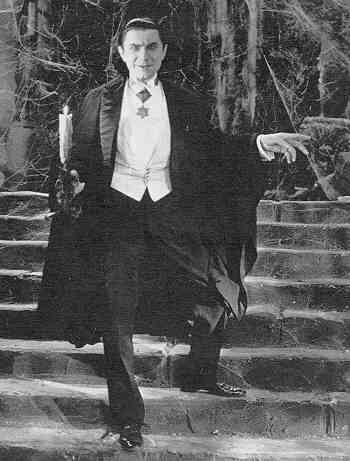
Dracula for President!
Knows how to handle predatory lenders
And vows to cut the taxes that are sucking the life out of the economy
Experienced to an extreme
Extraordinarily well-seasoned
Ready to lead
Knows how to persuade and command
Skillful in diplomacy
Adept in foreign policy
Will increase defense spending on much need impalements of war
But will not intervene in the internal affairs of other nations
Unless we are invited in
Says he is reluctant to spill even one drop of our young soldiers' blood
On foreign soil
A man of honor and nobility
And faith in the power of religion
His choice for Vice-President
The Mummy
Who says to call him by his nickname
Sandy
A favorite of beach volleyball moms
And very knowledgeable when it comes to the conflicts of the Middle East
False rumors claim he's a secret Muslim
He counters that his religion is a highly personal matter
Affirms he would be a strong defender of the national treasury
But troubled by the threat of indictment for alleged involvement
In a pyramid scheme
Vote or die!
So monsters cry!
Vote or die!
The Wolfman for President!
Dark horse favorite of the youth
A fierce defender of the environment
And animal rights
But assures us he's no vegetarian
A libertarian who believes in survival of the fittest
And capital punishment
Promises to take a bite out of crime
While maintaining that there is no silver bullet to solve all our problems
An advocate of change
Some accuse him of flip-flopping on the issues
Every month
Some think him too impulsive
Some curse him
And call him lunatic fringe
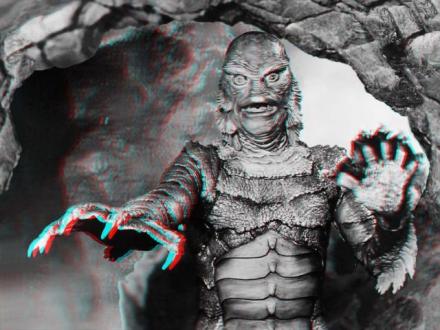
Especially after picking the Creature from the Black Lagoon
As his Vice-Presidential candidate
Who insists on the need for naval power
Wants to build more nuclear submarines
Supports increased consumption
Tells people to take longer vacations
And go swimming
A favorite son of California
But given the likelihood that the Wolfman could become incapacitated
Voters wonder if the Creature is fit to be President
Or just too green?
So...

Vote for the monster of your choice!
Vote for the monster of your dreams!
Vote and let them hear your voice!
Vote and let them hear your screams!

Monnnnnsterrrrrrrrrrrrrrrrrrrrrrssssssssss!!!!!!!!!!!!
VOTE!

This poem was written in response to a challenge issued in a poetry group on MySpace as part of a contest for the month of October. The challenge was to write a poem that involved all six of those monsters, all of which appeared in movies produced by Universal Studios, the Hollywood studio that was known for its Famous Monsters from Filmland. And if you are of a certain age, you might remember the way cool magazine of that title. Not surprisingly, it has a website of its own, http://www.famousmonsters.com, not to mention a wikipedia entry. Mostly, I remember the magazine covers, hmmm, if I close my eyes I can almost see them now...


Hmm, that last one is rather poignant, isn't it? The King Kong of 1976 atop the Twin Towers... There are monsters in filmland, but they're nothing in comparison to the monsters in the real world. But let's keep things light, okay?

So, trick or treat! But beware the candied dates, okay? Presidential election campaigns are monsters, so choose your evil, but remember that the really scary part comes after Election Day, when they all take off their masks.

Boo!

Psst, did you bring the shaving cream, eggs, and toilet paper???

Oh, and let's give The Boss the last word--Halloween Greetings from New Jersey, courtesy of the Jersey Devil:

Tuesday, October 28, 2008

Spaced Out

So, one of the fundamental distinctions in the media ecology of Marshall McLuhan, Edmund Carpenter, Tony Schwartz, and related to that of Walter Ong and Edward T. Hall, is the distinction between acoustic space and visual space. This concept first appears in an article that McLuhan and Carpenter publish in their Explorations journal in the fifties, and reprint in their anthology Explorations in Communication, sadly long out of print.

Visual space is the sense of space that we have become accustomed to over the past five centuries or so, as it is the sense of space associated with literacy, especially alphabetic literacy and the habits of reading that go along with that, and intensified by print media--McLuhan particularly emphasized the fact that our eyes were trained to use a fixed point of view, a form of vision that does not come naturally to us. Visual space is also the sense of space that has its roots in Euclidean geometry with its linear, and rectilinear bias, is associated with the development of perspective in art during the Renaissance, and is linked to Newton's notion of absolute space.

It's worth noting here that Alfred Korzybski associated his non-Aristotelian system of general semantics with non-Euclidean geometry and non-Newtonian (Einsteinian) physics just as electric technologies and media were shifting our sense of space away from the visual and back to the acoustic. That is a wave of change that we are still riding today.

So, it was a pleasure to come across this charming YouTube video that parodies the Mac vs. PC commercials to provide a pithy introduction to the concepts and distinctions between acoustic and visual space. And they did it for a media ecology class--how cool is that? Well done, guys!


Oh, and if you want to go see them in their native habitat, here's the link: I'm Acoustic Space And I'm Visual Space.


Sunday, October 26, 2008

Korzybski's General Semantics as an Ecological Approach

As I mentioned in previous posts, specifically Thoughts About Time-Binding 1, Thoughts About Time-Binding 2, and Thoughts About Time-Binding 3, and Thoughts About Time-Binding 4, I recently went back over Alfred Korzybski's first book, Manhood of Humanity, where he discusses his notion of time-binding, and how that process might be improved. Manhood of Humanity was published in 1921, before Korzybski had developed his system called general semantics, which was detailed in Science and Sanity, published in 1933.

The specific volume I was reviewing, however, was the second edition of Manhood of Humanity, published in 1950, the year Korzybski passed away, and this second edition contains new material of no small interest. In this post, I am only going to refer to one item that was added in lieu of a new introduction for the second edition (which Korzybski was unable to write), entitled "What I Believe" (Alfred Korzybski, Manhood of Humanity (2nd ed.). Brooklyn, NY: Institute of General Semantics, 1950, pp. xli-lvii). This piece was originally written in 1948, fifteen years after the publication of Science and Sanity, and provides some insight into Korzybski's own thoughts about his general semantics project.

I should note that if you want a summary of what general semantics is all about, you can find it at the Institute of General Semantics website. In this post, I only want to note some points that I find of particular interest in this essay, especially in light of the connection between general semantics and media ecology. Neil Postman was known to refer to media ecology as general semantics writ large, and it is not that great a leap from understanding how language influences our thought and behavior to understanding how the new languages we call media infuence our thought and behavior.

But I want to go a little further than that, and note how Korzybski himself was working on an ecological approach. It is worth noting that Korzybski must have been sympathetic to mechanical approaches, given his background as an engineer and his prediliction for science. But of course science had undergone radical change in the 20th century, and this certainly colored Korzybski's view of things.

So, let's start with a passage that firmly established Korzybski as an ecological thinker:

I could not use, in my further studies, the older 'organism-as-a-whole' approaches, but had to base my analysis on the much more complex 'organism-as-a-whole-in-an-environment'. I had to include neuro-linguistic and neuro-semantic (evaluational) environments as environments, and also had to consider geographic, physico-chemical, economic, political, ecological, socio-cultural, etc., conditions as factors which mould human personalities, and so even group behaviour. This statement is entirely general, and applies to highly civilized people as well as the most primitive. (pp. xliv-xlv)
And, well, I guess I could end this post right there, that about sums things up, ecologically speaking, but I think I will continue on. In the next paragraph to follow, Korzybski sets up an interesting distinction between what he considers to be the best and worst case scenarios for the human psyche:

Common sense and ordinary observations convinced me that the average, so-called 'normal person' is so extremely complex as to practically evade an over-all analysis. So I had to concentrate on the study of two extremes of human psycho-logical reactions: a) reactions at their best, because of their exceptional predictability, as in mathematics, the foundations of mathematics, mathematical physics, exact sciences, etc., which exhibit the deepest kind of strictly human psycho-logical reactions, and b) reactions at their worst, as exemplified by psychiatric cases. In these investigations I discovered that physico-mathematical methods have application to our daily life on all levels, linking science with problems of sanity, in the sense of adjustment to 'facts' and 'reality'. (p. xlv)
I am fascinated by this contrast between the psychiatric concept of insanity, and what might be considered a kind of supersanity associated with a scientific orientation. Korzybski parts company with Sigmund Freud on the opposite end of insanity, in that Freud just looked for people to be well-adjusted to the norms of society, and instead Korzybski in some ways parallels Carl Jung, who argued for concept of consciousness as evolving, and now ready to move on collectivey to a higher level. Whether science really represents humanity at its best is of course debatable, and ultimately a value judgment, but it is certainly true that science is characterized by "exceptional predictability"--scientific method represents the best way to make accurate assessments and predictions about reality.

Skipping ahead a paragraph or two, Korzybski makes a basic point about language and symbolic communication:

Linguistic and grammatical structures also have prevented our understanding of human reactions. For instance, we used and still use a terminology of 'objective' and 'subjective', both extremely confusing, as the so-called 'objective' must be considered a construct made by our nervous system, and what we call 'subjective' may also be considered 'objective' for the same reasons. (p. xlvi)
We see then a skeptical orientation, and a step towards what would later be termed social construction or constructivism, the idea that reality is constructed by our communication. There is a kind of irony in that, looking at objecitivity objectively reveals our inescapable subjectivity, which stands as an objectively verifiable fact. Of course, we all share in our subjectivity, so that it is a shared subjectivity, or as Martin Buber put it, intersubjectivity.

Next, Korzybski discusses the key distinction he makes between two different levels, the silent and the verbal. This is fundamental to general semantics, just as other polar oppositions have been elsewhere in media ecology (ear vs. eye, orality vs. literacy, space bias vs. time bias, cool medium vs. hot medium, script vs. print, print vs. electronics, interpersonal communication vs. mass communication, dialogue vs. public speaking, interactivity vs. one-way communication, etc.):

My analysis showed that happenings in the world outside our skins, and also such organismal psychological reactions inside our skins as those we label 'feelings', 'thinking', 'emotions', 'love', 'hate', 'happiness', 'unhappiness', 'anger', 'fear', 'resentment', 'pain', 'pleasure', etc., occur only on the non-verbal, or what I call silent levels. Our speaking occurs on the verbal levels, and we can speak about, but not on, the silent or un-speakable levels. This sharp, and inherently natural, yet thoroughly unorthodox differentiation between verbal and non-verbal levels automatically eliminates the useless metaphysical verbal bickerings of millenniums about 'the nature of things', 'human nature', etc. For many metaphysical verbal futile arguments, such as solipsism, or 'the unknowable', have been the result of the identifications of verbal levels with the silent levels of happenings, 'feelings', etc., that the words are merely supposed to represent, never being the 'reality' behind them. (p. xlvii)
The silent levels correspond to perception, and the verbal to language and symbols, of course, and media ecologists such as Marshall McLuhan, Walter Ong, Edmund Carpenter, Tony Schwartz, and others have emphazed the importance of perception as the basis of human understanding. Korzybski acknowledges that his general semantics draws on several other approachs, including phenomenology (which emphasizes the role of perception), in the next paragraph:

Such psycho-logical manifestations as those mentioned above can be dealt with in a unified terminology of evaluation, with the result that an empirical general theory of values, or general semantics, becomes possible, and with its roots in the methods of exact sciences, this can become the foundation of a science of man. For through the study of exact sciences we can discover factors of sanity. Different philosophical trends as found in disciplines such as Nominalism, Realism, Phenomenalism, Significs, Semiotic, Logical Positivism, etc., also become unified by a methodology, with internationally applicable techniques, which I call 'non-aristotelian', as it includes, yet goes beyond and brings up to date, the aims and formulations of Aristotle. (p. xlvii)
An interesting definition of general semantics appears here: "an empirical general theory of values." And he does make it clear that he is not anti-Aristotelian--had he been doing this work in the late 20th century he no doubt would have called general semantics post-Aristotelian.

Going into the next paragraph, Korzybski sums up the point about the disconnect between percept and concept:

Whatever we may say something is, obviously is not the 'something' on the silent levels. Indeed, as Wittgenstein wrote, 'What can be shown, cannot be said.' In my experience I have found that it is practically impossible to convey the differentiation of silent (unspeakable) levels from the verbal without having the reader or the hearer pinch with one hand the finger of the other hand. He would then realize organismally that the first–order psycho-logical direct experiences are not verbal. The simplicity of this statement is misleading, unless we become aware of its implications, as in our living reactions most of us identify in value the two entirely different levels, with often disastrous consequences. (p. xlviii)

And moving on to the next paragraph, he sums it all up in one pithy sentence:

I firmly believe that the consciousness of the differences between these levels of abstractions; i.e., the silent and verbal levels, is the key and perhaps the first step for the solution of human problems. (p. xlviii)


Moving to the next paragraph now, Korzybski continues to emphasize the importance of perception over language:

There is a tremendous difference between 'thinking' in verbal terms, and 'contemplating', inwardly silent, on non-verbal levels, and then searching for the proper structure of language to fit the supposedly discovered structure of the silent processes that modern science tries to find. If we 'think' verbally, we act as biased observers and project onto the silent levels the structure of the language we use, and so remain in our rut of old orientations, making keen, unbiased observations and creative work well-nigh impossible. In contrast, when we 'think' without words, or in pictures (which involve structure and therefore relations), we may discover new aspects and relations on silent levels, and so may produce important theoretical results in the general search for a similarity of structure between the two levels, silent and verbal. Practically all important advances are made that way. (pp. xlviii-xlix)
Hard not to think of how Albert Einstein imagined himself riding on a beam of light here, but I also can't help but think about the connection to autism, given that Einstein might have been on the autism spectrum--a bit of a disconnect from language, and the strong visual imagination, can be found in many high functioning individuals with autism. I get into this in my book, Echoes and Reflections: On Media Ecology as a Field of Study, and I won't bother to here. Certainly, following Howard Gardner's work on intelligence, we know that different people have different kinds of intelligences, some visual, some verbal, some mathematical, some socio-emotional. But again, that's a discussion for another time and place.

So, on to the next paragraph, and Korzybski makes a point I find highly significant, on the primacy of relationship or relations:

So far the only possible link between the two levels is found in terms of relations, which apply equally to both non-verbal and verbal levels, such as 'order' (serial, linear, cyclic, spiral, etc.), 'between-ness', 'space-time', 'equality' or 'inequality', 'before', 'after', 'more than', 'less than', etc. Relations, as factors of structure, give the sole content of all human knowledge. (p. xlix)
And this does bring me back to the point I started out with, Korzybski's ecological perspective. I believe that an emphasis on relationships is the basis of an ecological approach, so I think that last sentence bears repeating:

Relations, as factors of structure, give the sole content of all human knowledge. (p. xlix)
Knowledge is not in or of things per se, but in the relationships among things. It's the basic understanding of the universe according to Einstein, and the basic understanding of humanity according to Buber. Can you relate?

Tuesday, October 21, 2008

Poetry is Easy, Comedy is Hard

Last month, in a post entitled What Makes a Poet, I mentioned one of my MySpace friends, Si, and Si posted a video on his blog that I found too funny to pass up. And I'm not too proud to rip it off, all for the benefit of the Blog Time Passing reader (I know there's only one of you, and you're it!).

So, this is comedy about poetry, by an English comedian named Rik Mayall, and it dates back to the early 1980s, but the humor is pretty up-to-date. And so, without further ado, here's Rik:


`


So, my conclusion is as follows: Poetry is easy, comedy is hard... or vice versa!

Monday, October 13, 2008

Pinhole Glasses? The Eyes Have It!

So, before I get to the topic of pinhole glasses, let me tell you a little bit about my eyes.

I've been nearsighted since childhood, mostly in one eye, the other one being pretty close to normal. I don't know if I exactly have one of those lazy eyes, but it definitely is not a hard worker. I remember reading in one of Carlos Castaneda's book that brujos or shamans tends to have that kind of optical asymmetry, and I think maybe my mother associated it with being a witch and giving someone a "bad eye" (aka evil eye).

Of course, Marshall McLuhan pointed out a long time ago that perception can be modified through training, and as literates, we train ourselves to be nearsighted as well as to use a fixed point of view. This was long before they started to have kids do eye exercises, and I don't know if they would have helped me as a kid, but I wish I had the option back then. Instead, I was prescribed glasses back when I was in the fifth grade, but avoided using them most of the time, except when I was sitting in the back of class and couldn't read the blackboard. As an adult, I used glasses for driving, and eventually for going to the movies, shows, etc., anytime I have to see things for a distance. Like most folks my age, my vision is not what it used to be.

I never tried contact lenses, and as for laser surgery, well, I don't think so. I got progressive lenses a couple of years ago, which are kind of like trifocals, but I have not been able to read with them, much to my disappointment. I guess I'm atypical in that I don't like to read looking downwards.

So, I was asked to take a look at the website for pinhole eyeglasses, which you can see for yourself by clicking here. And here's what they look like:


I thought the idea was quite intriguing. For some time now, I have been taking my mother to a retina specialist on account of her having developed macular degeneration. And I noticed that one test that they tried with her was to have her look through pinholes and see if her vision improved at all (it didn't). So I gather that there is some solid basis for this alternative to prescription lenses. In fact, here is their page on the Science of Pinhole Glasses. Their claim is that this can help with myopia, hyperopia, presbyopia, astigmatism, computer vision syndrome or cataracts, while prescription lenses lead to acquired myopia.

So I agreed to receive a sample pair of pinhole glasses and post a review. The product itself is intriguing, and the price is cheap enough, at $14.99 a pair. And they look unusual enough that they could be used as part of a Halloween costume (think compound eye, as in spiders) or maybe create an interesting look for someone who's going out clubbing (I would definitely have worn these to CBGBs back in the day).

So, I tried the pinhole glasses out. They create an interesting effect, and I actually can read the words on the computer screen with my very nearsighted eye with them on, whereas it's all a blur without them. This is with no corrective lenses involved, mind you, just the pinholes narrowing the light. Very interesting. I think whatever you're looking at needs to be well lit, though. I'm not sure I'd want to watch a movie with them, and I didn't feel comfortable reading the newspaper with them either, but then again I don't normally use any glasses when reading anything. So, I think I may continue to experiment with them, but in all probability I will just have to settle for being a brujo.

Saturday, October 11, 2008

Thoughts About Time-Binding 4

So, once more I take up the topic of how time does bind, following up on Thoughts About Time-Binding 1, Thoughts About Time-Binding 2, and Thoughts About Time-Binding 3 with a fourth installment based on my recent rereading of Manhood of Humanity by Alfred Korzybski, the founder of general semantics, having been written before he founded general semantics.

As previously noted, time-binding is the term Korzybski used to refer to the distinctly human capacity to pass on information and knowledge from one generation to the next, and thereby make progress over time. And Korzybski also distinguished between the slow, gradual time-binding of most human cultures, and the rapid progress made possible by science and engineering, and believed that it would be in the best interests of humanity if we were to apply a scientific approach not just to the specialized sectors associated with science and technology, but to all human affairs.

Something that struck me as quite interesting about Manhood of Humanity, especially in light of the current financial meltdown, is that he devotes considerable attention to the topic of economics. Now, it seems to me that Korzybski, who was Polish, was in close proximity to the newly formed Soviet Union during the First World War, before he immigrated to the United States. He certainly was no Marxist, but the question of economic systems must have been on everyone's mind at the time. Economics shares with the hard sciences a decidedly materialist orientation, as well as a penchant for quantification, but Korzybski rightly identifies it as pseudo-science. Of course, Karl Marx was not a numbers guy, and neither was Thorsten Veblen, who shared with Korzybski an interest in engineering, as noted in Thoughts About Time-Binding 3.

But let's start with a quote from Korzybski about production, a term quite familiar in Marxist discourse:

all problems of production come ultimately to the analysis of

(1) Natural resources of raw material and natural energy, freely supplied by nature, which, as we have seen, in the form as produced by nature alone, have very little or no value for humanity;

(2) The activity of the human brain (because human muscles are always directed by the brain) which gives value to the otherwise useless raw materials and energies.

Hence, to understand the processes of production, it is essential to realize that humanity is able to survive only by virtue of the capacity of humans to exploit natural resources—to convert the products of nature into forms available for human needs. If humanity had only the capacity of apes, depending exclusively on wild fruits and the like, they would be confined to those comparatively small regions of the globe where the climate and the fertility of the soil are specially favorable. But in the case supposed, humans would not be humans, they would not be time-binders—they would be animals—mere space-binders. (pp. 84-85)
So, the means of production are the product of time-binding. That is not a very radical notion, as this amounts to an acknowledgment of technological progress, and the idea, widely-accepted in anthropology, that humans could not survive without some form of technology.

A bit further into the book, Korzybski devotes two chapters to "Wealth" and "Capitalist Era" so economics is very much on his mind here. Consider now how he applies the concept of time-binding to economics in a way that the "dismal science" typically overlooks:

The potential use-values in wealth are created by human work operating in time upon raw material given by nature. The use-values are produced by time-taking transformations of the raw materials; these transformations are wrought by human brain labor and human muscular labor directed by the human brain acting in time. The kinetic use-values of wealth are also created by human toil—mainly by the intellectual labor of observation, experimentation, imagination, deduction and invention, all consuming the precious time of short human lives. It is obvious that in the creation of use-values whether potential or kinetic, the element of time enters as an absolutely essential factor. The fundamental importance of time as a factor in the production of wealth—the fact that wealth and the use-values of wealth are literally the natural offspring of the spiritual union of time with toil—has been completely overlooked, not only by the economics, but by the ethics, the jurisprudence and the other branches of speculative reasoning, throughout the long period of humanity's childhood. In the course of the ages there has indeed been much “talk” about time, but there has been no recognition of the basic significance of time as essential in the conception and in the very constitution of human values.
It is often said that “Time is Money”; the statement is often false; but the proposition that Money is Time is always true. It is always true in the profound sense that Money is the measure and symbol of Wealth—the product of Time and Toil—the crystallization of the time-binding human capacity. IT IS THUS TRUE THAT MONEY IS A VERY PRECIOUS THING, THE MEASURE AND SYMBOL OF WORK—IN PART THE WORK OF THE LIVING BUT, IN THE MAIN, THE LIVING WORK OF THE DEAD. (pp. 116-117)

I very much like the way he argues for a time consciousness that is generally lacking from all aspect of human thought, not just economics. And economics is certainly one-dimensional, not only in its focus on space rather than time (wealth as existing in the present rather than the past), but also, as other media ecology scholars have noted, because economics reduces production to quantitative value, rather than considering the qualitative impact of innovations on consciousness and culture. Not surprisingly, there have been a number of economists who have expanded their scholarship to consider and focus upon technology. One of the most notable is the esteemed Canadian political economist, Harold Innis, who wrote about space bias and time bias in cultures as associated with their media of communication and transportation, and also the Harvard economist David Landes, who authored both The Wealth and Poverty of Nations, and Revolution in Time, a study of clock technology.

But what is really striking in Korzybski's analysis is the idea that wealth is mostly not something that people earn, contrary to our own myth of the American dream, possibility of success, Horatio Alger tales of going from rags to riches. Rather, most wealth is inherited. Unlike Marx, Korzybski is not concerned with the fact that inherited wealth tends to stay in the hands of a small population over time, generally within families, with a socioeconomic class. Instead, Korzybski focuses on wealth as a common human inheritance. Let's read some of what he has to say about the capitalistic era:

It may seem strange but it is true that the time-binding exponential powers, called humans, do not die—their bodies die but their achievements live forever—a permanent source of power. All of our precious possessions—science, acquired by experience, accumulated wealth in all fields of life—are kinetic and potential use-values created and left by by-gone generations; they are humanity's treasures produced mainly in the past, and conserved for our use, by that peculiar function or power of man for the binding of time. That the natural trend of life and the progress of the development of this treasury is so often checked, turned from its natural course, or set back, is due to ignorance of human nature, to metaphysical speculation and sophistry. Those who, with or without intention, keep the rate of humanity's mental advancement down to that of an arithmetic progression are the real enemies of society; for they keep the life-regulating “sciences” and institutions far behind the gallop of life itself. The consequence is periodic social violence—wars and revolutions.
Let us carry the analysis of potential and kinetic use-values a little further. All potential use-values left to us by the dead are temporal and differ in utility. Many potential use-values are found in museums and have very limited value to-day in practical life. On the other hand some roads or water-ways built by the ancients have use-value to-day; and an almost endless list of modern potential use-values have or will have use-values for a long time to come, such as buildings, improved lands, railroad tracks, certain machines or tools; the use-value of some such items of material wealth will last for more than one generation. Kinetic use-values are permanent in their character, for, though they may become antiquated, they yet serve as the foundation for the developments that supersede them, and so they continue to live in that to which they lead.
I would draw attention at this point to one of the most important kinetic and potential use-values produced by humanity—the invention of the steam engine. Through this invention, humanity has been able to avail itself, not only of the living fruits of dead men's toil, but also of the inconceivably vast amounts of solar energy and time bound up in the growth of vegetable life and conserved for use in the form of coal and other fuels of vegetable origin. This invention has revolutionized our life in countless directions. To be brief, I will analyse only the most salient effects. Human Engineering has never existed except in the most embryonic form. In remote antiquity the conception and knowledge of natural law was wholly absent or exceedingly vague. Before the invention of the steam engine, people depended mainly upon human powers—that is, upon “living powers”—the powers of living men, and the living fruits of the labor of the dead. Even then there were manifold complications.
The invention of the steam engine released for human use a new power of tremendous magnitude—the stored-up power of solar energy and ages of time. But we must not fail to note carefully that we to-day are enabled to use this immense new power of bound-up solar energy and time by a human invention, a product of the dead.
The full significance of the last statement requires reflection. The now dead inventor of the steam engine could not have produced his ingenious invention except by using the living powers of other dead men—except by using the material and spiritual or mental wealth created by those who had gone before. In the inventor's intellectual equipment there was actively present the kinetic use-value of “bound-up-time,” enabling him to discover the laws of heat, water, and steam; and he employed both the potential and kinetic use-values of mechanical instruments, methods of work, and scientific knowledge of his time and generation—use-values of wealth created by the genius and toil of by-gone generations. This invention was not produced, let us say 6000 years ago, because civilization was not then sufficiently advanced: mathematically considered, the production of this great use-value had to await all the accumulated work of six thousand years of human ingenuity and human labor. So, if we choose, the steam engine may be considered a kinetic use-value in which the factor of time is equal to something like 6000 years, or let us say roughly 200 generations.
It is obvious that, in one life time, even a genius of the highest order, could not, in aboriginal conditions, have invented and built a steam engine, when everything, even iron, was unknown. Of course if the same inventor could have had a life of several thousands of years and could have consecutively followed up all the processes, unhampered by the prejudices of those days, and been able to make all of these inventions by himself, he would represent in himself all the progress of civilization.
By this illustration we see the profound meaning of the words—the living powers of the dead; we see the grave importance in human life of the factor TIME; we behold the significance of the time-binding capacity of man. The steam engine is to be seen anew, as in the main the accumulated production of dead-men's work. The life of one generation is short, and were it not for our human capacity to inherit the material and spiritual fruit of dead men's toil, to augment it a little in the brief span of our own lives, and to transmit it to posterity, the process of civilization would not be possible and our present estate would be that of aboriginal man. Civilization is a creature, its creator is the time-binding power of man. Animals have it not, because they belong to a lower type or dimension of life.
Sophistry avails nothing here; a child, left in the woods, would be and remain a savage, matching his wits with gorillas. He becomes a civilized man only by the accumulation of, and acquaintance with dead men's work; for then and only then can he start where the preceding generation left off. This capacity is peculiar to men; the fact can not be repeated too often.
It is untrue to say that A started his life aided exclusively by the achievements of (say) his father, for his father's achievements depended on the achievements of his immediate predecessors; and so on all the way back through the life of humanity. This fact, of supreme ethical importance, applies to all of us; none of us may speak or act as if the material or spiritual wealth we have were produced by us; for, if we be not stupid, we must see that what we call our wealth, our civilization, everything we use or enjoy, is in the main the product of the labor of men now dead, some of them slaves, some of them “owners” of slaves. The metal spoon or the knife which we use daily is a product of the work of many generations, including those who discovered the metal and the use of it, and the utility of the spoon.
And here arises a most important question: Since the wealth of the world is in the main the free gift of the past—the fruit of the labor of the dead—to whom does it of right belong? The question can not be evaded. Is the existing monopoly of the great inherited treasures produced by dead men's toil a normal and natural evolution?
Or is it an artificial status imposed by the few upon the many? Such is the crux of the modern controversy.
It is generally known that the invention of the steam engine and other combustion engines which release sun-power for mechanical use, has revolutionized the economic system; for the building of engines in the scale of modern needs, it is necessary to concentrate a great number of living men in one place, to build factories, to set up machines used in producing the engines, and all this requires the use of vast amounts of money. That is why this era is called the capitalistic era. But it is necessary to stop here and analyse the factors of value in the engine to be made and in the money used for the purpose of making use of the stored-up energies of the sun. We have found that the major part of the engine and all factors connected with its production are the combined power of dead men's labor. We have found that wealth or capital and its symbol, money, are also, in the main, the bound-up power of dead men's labor; so that the only way to obtain the benefit in the release of sun-power, is by using the product of the toil of the dead. It is further obvious that only the men or organizations that are able to concentrate the largest amounts of money, representing the work of the dead, can have the fullest use of the stored-up energies of time and the ancient sun. Thus the monopoly of the stored-up energies of the sun arises from monopolizing the accumulated fruits of dead men's toil. These problems will, in the future, be the concern of the science and art of Human Engineering. (pp. 119-125)
This is certainly not all that much at odds with the basic foundation of "scientific socialism" associated with Marxism, but again Korzybski is not talking about the abolition of private property or advocating communal living, he is simply acknowledging that most wealth is the common inheritance of all human beings, and arguing for the need for rational governance of human societies.

In this next passage, Korzybski tries to transcend politics in making a powerful ethical argument:

Whether we be capitalists or socialists or neither, we must learn that to prey upon the treasury left by the dead is to live, not the life of a human being, but that of a ghoul. Legalistic title—documentary ownership—does not alter the fact. Neither does lust for the same.
When we have acquired the just conception of what a human being is we shall get away from the Roman conception according to which a human being is instrumentum vocale; an animal, instrumentum semivocale: and a tool, instrumentum mutum. To regard human beings as tools—as instruments—for the use of other human beings is not only unscientific but it is repugnant, stupid and short sighted. Tools are made by man but have not the autonomy of their maker—they have not man's time-binding capacity for initiation, for self-direction, and self-improvement In their own nature, tools, instruments, machines belong to a dimension far lower than that of man. (p. 133)
In this passage, Korzybski's profound humanism is quite clear. He is particularly concerned with dehumanization, with the loss of our humanity either by not living up to our potential, or by turning ourselves into tools, instruments, machines.

And what follows shortly afterwards, interesting enough for scholars of communication and media, is a statement about the news media:

One of the greatest powers of modern times is the Press; it commands the resources of space and time; it affects in a thousand subtle ways the form of our thoughts. It controls the exchange of news throughout the world. Unfortunately the press is often controlled by exploiters of the “living powers of the dead,” and so what is presented as news is frequently so limited, colored and distorted by selfish interests as to be falsehood in the guise of truth. Honest, independent papers are frequently starved by selfish conspirators and forced to close down. Thus the press, which is itself the product in the main of dead men's toil, is made a means for the deception and exploitation of the living. Indeed the bitter words of Voltaire seem to be too true: “Since God created man in his own image, how often has man endeavored to render similar service to God.” Those who want to use such “God-like” powers to rule the world are modern Neros, who in their wickedness and folly fancy themselves divine. To deceive, and through deception, to exploit, rob and subjugate living men and women, and to do it by prostituting the living powers created by the dead, is the work, I will not say of men, but of mad men, greedy, ignorant and blind. What is the remedy? Revolution? Revolution is also mad. The only remedy is enlightenment—knowledge, knowledge of nature, knowledge of human nature, scientific education, science applied to all the affairs of man—the science and art of Human Engineering. (pp. 137-138)

Here again we can see how the unfortunate phrase "human engineering" (which Korzybski eventually abandoned due to its negative connotations), and we can also see that what he is really talking about is education. And he is also talking about human freedom:

Freedom, rightly understood, is the aim of Human Engineering. But freedom is not license, it is not licentiousness. Freedom consists in lawful living—in living in accord with the laws of human nature—in accord with the natural laws of Man. A plant is free when it is not prevented from living and growing according to the natural laws of plant life; an animal is free when it is not prevented from living according to the natural laws of animal life; human beings are free when and only when they are not prevented from living in accord with the natural laws of human life. I say “when not prevented,” for human beings will live naturally and, therefore, in freedom, when they are not prevented from thus living by ignorance of what human nature is and by artificial social systems established, maintained, and protected by such ignorance. Human freedom consists in exercising the time-binding energies of man in accordance with the natural laws of such natural energies. Human freedom is thus the aim of Human Engineering because Human Engineering is to be the science of human nature and the art of conducting human affairs in accordance with the laws of human nature. Survival of the fittest, where fittest means strongest, is a natural law for brutes, for animals, for the class of mere space-binders. Survival of the fittest, where fittest means best in science and art and wisdom, is a natural law for mankind, the time-binding class of life. (p. 153-154)
We see here a critique of social darwinism, and after all, we have come to understand that cooperation plays an important role in the biological survival of species, as well as competition. And the key to freedom according to Korzybski is the unlocking of the potential inherent in human nature. What stands in the way of human freedom is an inability to understand and function in sync with our time-binding capabilities:
Such are the children of folly: (1) Drifting fools—ignorers of the past—disregarders of race experience—thoughtless floaters on the shifting currents of human affairs; (2) Static fools—idealizers of the past—complacent lovers of the present—enemies of change—fearful of the future; (3) Dynamic fools—scorners of the past—haters of the present—destroyers of the works of the dead—most modest of fools, each of them saying: “What ought to be begins with Me; I will make the world a paradise; but my genius must be free; now it is hampered by the existing ‘order’—the bungling work of the past; I will destroy it; I will start with chaos; we need light—the Sun casts shadows—I will begin by blotting out the Sun; then the world will be full of glory—the light of my genius.” (p. 169)
This sounds downright biblical! And here is what Korzybski immediately goes on to say:

In striking contrast with that three-fold division of Folly, the counsel of Wisdom is one, and it is one with the sober counsel of Common Sense. What is that counsel? What is the united counsel of wisdom and common sense respecting the past? The answer is easy and easy to understand. The counsel is this: Do not ignore the past but study it—study it diligently as being the mightiest factor among the great factors of our human world; endeavor to view the past justly, to contemplate it as it was and is, to see it whole—to see it in true perspective—magnifying neither its good nor its evil, neither its knowledge nor its ignorance, neither its enterprise nor its slothfulness, neither its achievements nor its failures; as the salient facts are ascertained, endeavor to account for them, to find their causes, their favoring conditions, to explain the facts to understand them, applying always the question Why? Centuries of centuries of cruel superstition—Why? Centuries of centuries of almost complete ignorance of natural law—Why? Centuries of centuries of monstrous misconceptions of human nature—Why? Measureless creations, wastings and destructions of wealth—Why? Endless rolling cycles of enterprise, stagnation, and decay—Why? Interminable alterations of peace and war, enslavements and emancipations—Why? Age after age of world-wide worship of man-made gods, silly, savage, enthroned by myth and magic, celebrated and supported by poetry and the wayward speculations of ignorant "sages"—Why? Age upon age of world-wide slow developments of useful inventions, craftsmanship, commerce, and art—Why? Ages of dark impulsive groping before the slow discovery of reason, followed by centuries of belief in the sufficiency of ratiocination unaided by systematic observation and experiment—Why? At length the dawn of scientific method and science, the growth of natural knowledge, immeasurable expansion of the universe in Time and in Space, belief in the lawfulness of Nature, rapidly increasing subjugation of natural forces to human control, growing faith in the limitless progressibility of human knowledge and in the limitless perfectibility of human welfare—Why? The widely diverse peoples of the world constrained by scientific progress to live together as in one community upon a greatly shrunken and rapidly shrinking planet, the unpreparedness of existing ethics, law, philosophy, economics, politics and government to meet the exigencies thus arising—Why? (pp. 169-171)

So, what is Korzybski's vision for the future manhood of humanity, Utopian though it may be? Here, take a look:

In humanity's manhood, patriotism—the love of country—will not perish—far from it—it will grow to embrace the world, for your country and mine will be the world. Your “state” and mine will be the Human State—a Cooperative Commonwealth of Man—a democracy in fact and not merely in name. It will be a natural organic embodiment of the civilizing energies—the wealth-producing energies—characteristic of the human class of life. Its larger affairs will be guided by the science and art of Human Engineering—not by ignorant and grafting “politicians”—but by scientific men, by honest men who know.
Is it a dream? It is a dream, but the dream will come true. It is a scientific dream and science will make it a living reality. (pp. 199-200)
Interesting, and not a bad thought at all. Of course, the devil is in the details:

How is the thing to be done? No one can foresee all the details, but in general outline the process is clear. Violence is to be avoided. There must be a period of transition—a period of adjustment. A natural first step would probably be the establishment of a new institution which might be called a Dynamic Department—Department of Coordination or a Department of Cooperation—the name is of little importance, but it would be the nucleus of the new civilization. Its functions would be those of encouraging, helping and protecting the people in such cooperative enterprises as agriculture, manufactures, finance, and distribution.
The Department of Cooperation should include various sections, which might be as follows:
(1) The Section of Mathematical Sociology or Humanology: composed of at least one sociologist, one biologist, one mechanical engineer, and one mathematician. Their work would be the development of human engineering and mathematical sociology or humanology; promoting the progress of science; providing and supervising instruction in the theory of values and the rudiments of humanology for elementary schools and the public at large. The members of the section would be selected by the appropriate scientific societies for a term fixed by the selectors.
(2) The Section of Mathematical Legislation: composed of (say) one lawyer, one mathematician, one mechanical engineer, selected as above. Their task would be to recommend legislation, to provide means for eliminating “Legalism” from the theory and practice of law, and to bring jurisprudence into accord with the laws of time-binding human nature and the changing needs of human society. Their legislative proposals, if ratified in a joint session of sections (1) and (2), would then be recommended to the appropriate legislative bodies.
(3) The Educational Section: composed of two or three teachers, one sociologist, one mechanical engineer, one mathematician, selected as above. They would elaborate educational projects and revise school methods and books; their decisions being subject to the approval of the joint session of sections (1), (2), and (3).
(4) The Cooperative Section: composed of mechanical engineers, chemical engineers, production engineers, expert bookkeepers, accountants, business managers, lawyers and other specialists in their respective lines. This section would be an “Industrial Red Cross” (Charles Ferguson) giving expert advice when asked for by any cooperative society.
(5) The Cooperative Banking Section: composed of financial experts, sociologists, and mathematicians; its task being to help with expert advice new cooperative people's banks.
(6) The Promoters' Section: composed of engineers whose duty would be to study all of the latest scientific facts, collect data, and elaborate plans. Those plans would be published, and no private person, but only cooperative societies, would be permitted by law to use them. The department would also study and give advice respecting the general conditions of the market and the needs in the various lines of production. This section would regulate the duplication of production.
(7) The Farming Section: composed of specialists in scientific and cooperative agriculture.
(8) The Foreign Section: for inter-cooperative foreign relations.
(9) The Commercial Section.
(10) The News Section: to edit a large daily paper giving true, uncolored news with a special supplement relating to progress in the work of Human Engineering. This paper would give daily news about the whole cooperative movement, markets, etc., etc.
All men selected to the places for this work should be the very best men in the nation. They should be well paid to enable them to give their full energy and time to their duties. All the selections for this work should be made in the same manner as mentioned above—through proven merits not clever oratory. Such appointments should be considered the highest honor that a country can offer to its citizens. Every selection should be a demonstration that the person selected was a person of the highest attainments in the field of his work.
The outline of this plan is vague; it aims merely at being suggestive. Its principal purpose is to accentuate the imperative necessity of establishing a national time-binding agency—a Dynamic Department for stimulating, guiding and guarding the civilizing energies, the wealth producing energies, the time-binding energies, in virtue of which human beings are human. For then and only then human welfare, unretarded by monstrous misconceptions of human nature, by vicious ethics, vicious economics and vicious politics, will advance peacefully, continuously, and rapidly, under the leadership of human engineering, happily and without fear, in accord with the exponential law—the natural law—of the time-binding energies of Man. (pp. 200-203)

And there you have it! Simple! Well, okay, it is a bit naive, in retrospect, but I present this here for its historical interest. And maybe it is time once more to start thinking about alternate ways to organize ourselves, in light of the spectacular failures of our economic and political systems recently. As Korzybski pointed out, it doesn't hurt to dream, to speculate, and to think about the future, about where we are going, about where we want to be going, about where we have been. And it really does all begin with a consciousness and understanding of time, and time-binding.