Monday, December 8, 2008

Sights and Sounds of the AKML and Creating the Future Symposium

So, I know I already blogged about it, but what the hey, time for some photographs, courtesy of Robert Francos, some of which he already posted on his blog, FFanzeen: Rock 'n' Roll With Integrity, along with some commentary about the event, in his recent post entitled, Douglas Rushkoff at General Semantics/Media Ecology Association Dinner, 11/14/2008, and of course you can click on that title to read what Robert wrote. But first let's look at some pictures, ok?

OK! So first, here's me greeting Doug Rushkoff before the AKML, with IGS Vice-President/Treasurer Jackie Rudig in the center:


Now, here's me giving my welcoming remarks:


Looking pretty snazzy, if I do say so myself. Now here's IGS President, Marty Levinson:


And on to the main event, here are a couple of shots of Doug delivering his Alfred Korzybski Memorial Lecture:


Pretty cool, huh? And finally, after it was all over, time for a hug:


And this has come up before, but to listen to Doug's talk, once again, here's a link to get an MP3 that also get's a bit of me introducing him, just click here. Another version that entirely omits my introduction can be downloaded from here. And there's a version that can be streamed from a third site (this may be the same recording as the first one): Douglas Rushkoff: Don't Change Your "Self", Change The World.

These audio links, and related blog posts, including my previous posts on the topic, were collected by Institute of General Semantics Webmaster Ben Hauck, and included on the Institute of General Semantics website, as the November 17, 2008 entry on the Recent News from the Institute of General Semantics page--many thanks, Ben. Ben also posted a number of pictures taken by Robert Francos, including the ones I already showed you. And here are some more from the AKML:


That's my graduate student, Pamela Miller, behind the table, handling registration and book sales. And there's Stephanie Bennett of Palm Beach Atlantic University on the right, she's a member of the Media Ecology Association's Board of Directors. Now here's a photo of the new editor of the IGS journal, ETC: A Review of General Semantics, Bill Petkanas of Western Connecticut State University, and like me a graduate of the dearly departed media ecology program at New York University.


And now this, another shot of Marty Levinson:


And here is another IGS Trustee, holding the office of Secretary, all the way from Paris, France, Vanessa Biard-Schaeffer:


And another of our Trustees, IGS Ambassador-At-Large, Milton Dawes from Montreal:


And yet another Trustee, Allen Flagg, who is also the President of the New York Society for General Semantics:


And we're not done yet, here's IGS Trustee George Barenholtz:


After my welcoming remarks, and before I introduced Rushkoff, Marty Levinson presented Allen Flagg with the 2008 J. Talbot Winchell Award in recognition of his lifelong service, accomplishments and time-binding efforts:


And here's a photograph of IGS Honorary Trustee Harry Maynard:


Now, how about a few more shots of Rushkoff, as this was his lecture after all:


And why not a close-up? Here goes:


And an audience shot featuring IGS Trustee Jerry Nierenberg:


OK, so that was all about the AKML on November 14, now on to the Creating the Future Symposium, and photos from the first day, November 15. Here's Pamela Miller again, at the registration area and book exhibit, set up this time in Fordham's Law School building, in the Atrium outside of McNally Auditorium:


That last is the view looking up, and here are some crowd shots from the Atrium:


OK, now let's go inside McNally Auditorium where I am introducing the morning's speakers:


And here they are, more or less, starting with Kathleen Sweeney from the New School:


Author David Berreby:


Tom de Zengotita from the Dalton School and NYU:


Author and NPR digital media maven Dick Meyer:


Information Architect for the New York Times, Alex Wright:


Biologist from NYU, Tyler Volk:


And author and Alfred Korzybski biographer, Bruce Kodish:


Unfortunately, there aren't photos everyone participating, in part because we had concurrent sessions, but here are some shots from the afternoon, from sessions taking place over in McMahon Hall. Here's philosopher Jerry Erion from Medaille College in Buffalo:


General semanticist Phil Ardery:


Media ecology program graduate Zhen-bin Sun, a professor of communication from Fairleigh Dickinson University:


Marty Levinson with his latest book:


And my colleague from Fordham, Margot Hardenbergh:


And a group shot:


Here's Stephanie Bennett again:


And Fordham and MEA's Janet Sternberg:


And this is Robert Berkman of the New School, my friend from Twitter:


And my old classmate from graduate school, Paul Lippert of East Stroudsburg University:


Now for the evening sessions back in McNally Auditorium. First, here's David Walczyk of Pratt Insitute standing, along with seated Alicia Gibb, and St. Louis activist Paul Guzzardo:


And here is author Andy Postman:


This audience shot features Shelley Postman, Neil's widow and Andy's mom, along with Terry Moran, a founder with Neil of the dearly departed media ecology program at NYU:


And here's Terry giving his address on media ecology as general semantics writ large:


Another shot of the audience:


And now Allen Flagg introducing Milton Dawes, and then Milton giving his talk:


And finally, me wrapping things up for the night:


And on to the second day, November 16, in McMahon Hall. And here I am again:


And media ecologist Brian Cogan from Molloy College:


Thom Gencarelli is a fellow founder of the MEA, and now a Trustee of the Institute:


The brilliant and hilarious Bob Blechman of model media ecologist fame:


My MA student Jessica Crowell, who did her thesis on prison policy towards media use:


And now some audience shots:


So, next are some shots from a session on Science Fiction. Here's my colleague and friend, Meir Ribalow:


And now, a couple of photos of John C. Wright, author of The Null-A Continuum, a sequel to the Null-A books of A. E. van Vogt:


In this second picture, he's holding a copy of Alfred Korzybski's Science and Sanity, the general semantics Ur-text, which I had just given to him as a present. Anyway, here's feminist science fiction critic Marleen Barr:


And my colleague and great friend, Paul Levinson on his own, and with Marleen:


And now some more crowd shots:


And now this, Eric Goodman doing his multimedia thing:


Which earned him a round of applause from me and Jackie Rudig, and everyone else of course:


And then I took the opportunity to introduce Peggy Cassidy, who earned her MA degree with us at Fordham, before getting her PhD with Neil Postman in the dearly departed media ecology program at NYU, and is now chair of the communication department at Adelphi University:


And here is a photo of general semantics educator Frank Gastner:


And Frank had Ben Hauck and Jackie Holtzman act out a little skit for him:


And then we have Bill Petkanas again:


And here's Renée Cherow-O'Leary, from the first graduating class of the dearly departed media ecology program, now teaching at Columbia University's Teachers College:


And once more, our Parisian representative, Vanessa Biard-Schaeffer:


And Ben Hauck:


And this is psychologist Lloyd Gilden, emeritus at Queens College, and the founder of the Lifwynn Foundation for Social Research:


And general semantics maven Hillel Schiller:


And who better to have the last word than Allen Flagg? Here he is:


And that is a fragment of a map of a much greater territory that you really had to experience first hand to fully appreciate. If you weren't able to make it, make it a point to be there next year! Could all of these smiling faces be wrong?

Thursday, December 4, 2008

It's Not Easy Being E-Green

So, I first came into contact with Dick Meyer after first being invited to participate on an episode of the Connecticut Public Radio program, Where We Live. Dick is the author of the book, Why We Hate Us, which was published early this year--it's a popular critique of the contemporary media environment and American culture along the lines of Daniel Boorstin's The Image and Christopher Lasch's Culture of Narcissism. I went out and bought the book, and read it!, thinking we'd be discussing it on the radio show, but as it turned out the program began with the host, John Dankowsky, interviewing Dick, and then moved to a discussion with me and Alex Halavais from Quinippiac University, that didn't involve Dick at all, and was all about the social impact of the interent. I posted about the program back in August, and here's the link: Where We Live?

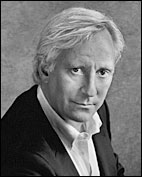
So, I was a bit disappointed, given that Dick is something of an intuitive media ecologist. In actuality he, is editorial director for digital media for NPR, which stands for National Public Radio, don'tchaknow? Here's the picture from his bio:


So you can click on the word bio to read all about him, if you want to.

So, I got in touch with Dick after the radio show, and invited him to participate in the Creating the Future Symposium we held at Fordham University following the Alfred Korzybski Memorial Lecture, just a couple of weeks ago. Here's my blog post with the program: Programming the Korzybski Lecture and Symposium. So Dick was part of a long morning session that started off the symposium, and he gave a nice talk for us I might add. So far, so good, but not all that blogworthy, you might be thinking.

Well, Dick also does a column for NPR.org, it's called Against the Grain, and today's entry is entitled E-Greens: The Rise Of Media Environmentalism. And what do ya know, it's about media ecology! You can click on the title to go read the piece in its natural habitat, or stay hear and look it over from the safe vantage point of the Blog Time Passing Zoological Garden. Here goes:

Against The Grain
by Dick Meyer

E-Greens: The Rise Of Media Environmentalism

Commentary

“Being mindful of your media diet is media ecology. The wonderful thing is that unlike with global warming and pollution, you can control your own exposure.”

NPR.org, December 4, 2008 · If you're reading this, you're at risk.

You, along with probably 90 percent of the American population older than 6 months, are susceptible to a variety of sneaky maladies associated with the Media Age: information overload, couch potato-obesity, social isolation, stressful multitasking and leisure time deficits. The "vast wasteland" is wasting us, as promised.

I recently learned there is a young, interdisciplinary academic field devoted to protecting us from media toxicity. It's called media ecology. In fact, I discovered that I have been a practicing media environmentalist for quite a while without even knowing it. I'm an E-Green and proud of it.

The idea of media ecology, I know, sounds like something Marshall McLuhan groupies argue about over tall skim chai lattes with Foucault followers — the winner gets a Derrida decoder ring. And it does have some navel-gazing heritage and aspects. "Media ecology looks into the matter of how media of communication affect human perception, understanding, feeling and value, and how our interaction with media facilitates or impedes our chances of survival," wrote Neil Postman, one of the trade's founders, in 1970.

Okay, a bit of a putdown, but hey, it's publicity. And while many media ecologists would cringe at putting McLuhan in the same sentence as Foucault and Derrida, others have no problem with such comparisons. And hey, Neil Postman gets the good quote, not too shabby that. Ok, ok, back to the column:


In the drone of everyday life, media ecology is unwittingly practiced by parents who tear their children away from Grand Theft Auto: Vice City on PlayStation. It is preached by priests, rabbis and ministers who warn about the materialism, prurience and violence that laces so much pop culture. It is one form of pollution that liberals (see Thomas de Zengotita's Mediated: How the Media Shapes Your World and the Way You Live in It) and conservatives (see Rod Dreher's Crunchy Cons: The New Conservative Counterculture and Its Return to Roots), seculars and believers dislike, though they describe their enmity with different vocabularies.

Unfortunately, not very many people listen to us nutty homespun ecologists of the media environment. Put another way, people don't turn their media machines off enough.

So, Tom de Zengotita gets a plug, and we hear some advice that would make Postman happy. And now this--some research for ya:


Evidence of this came in dramatic and clinical form this week. A comprehensive report on 30 years of research into the effect of media on children found overwhelming evidence that increased media exposure correlates with unhealthy things — obesity, tobacco use, sexual behavior and low academic performance. In other words, it affirmed common sense and simple observation.

The report by doctors at Yale University and the National Institutes of Health in conjunction with a nonprofit organization called Common Sense Media worked this way: Researchers evaluated 30,000 quantitative studies of issues related to children and media, then selected 173 that met established quality standards to use as the database. Overall, 80 percent of the 173 studies found that greater media exposure was associated with negative health outcomes for children and teens.

Of the studies that looked at the relation of specific content (sex in movies) to health risks (early sex, unsafe sex), 93 percent found associations. Interestingly, 75 percent of the studies that looked only at the quantity of media consumed (TV, music, video games and the Web) found more media equals more bad outcomes. So it doesn't matter that much what screen your kid is in front of; chances are, it isn't doing much good.

The evidence is the strongest for obesity and tobacco use, slightly less strong for drug use, alcohol use, sexual behavior and bad performance at school. Evidence tying media exposure to ADHD was the thinnest, though there hasn't been much research.

The study estimated that kids spend 45 hours a week with their various screens and ear pods; they spend 30 hours in school and 17 hours with parents. Media are what kids engage with most, except for their pillows.

And now for an interesting interpretation of the report:


Occasionally reports like this one, or some semi-scandal pertaining to a violent movie or sick lyric, lead to calls to regulate the content of media aimed at kids. That misses the point.

The quantity of media is far more important than the quality. Sex, violence, booze, drugs and potty humor are not new things to the species; exposure to mass quantities of omnipresent electronic information and images 24/7 on multiple, portable devices is a new kind of stimulus for our old brains. We process mediated information and stimulus differently than unmediated, directly perceived input.

This is what we complain about when we talk of information overload or info-glut. David Berreby, the author of Us & Them: The Science of Identity, suggested in a recent paper to a group of media ecologists that our anxiety doesn't come from absorbing more raw information than people in simpler times; it comes from absorbing a whole different kind of information — mediated information.

For example, we feel swamped by how much information is instantly available on the front page of The New York Times or on NPR.org. But Berreby notes that a tribal African who hunted to survive would be swamped by information when seeing a wildebeest in a field: Male or female? Alone? Wind direction? Predators nearby? What kind of trees in the distant forest? None of this data is mediated, trivial or distant. We have (had?) a lot of Darwinian hard-wiring to process that kind of data.

That isn't true of media information: It doesn't engage all the senses. It is all crafted by humans, much of it deliberately intended to sell or market or be addictive — or get our attention. It is harder to filter this information than unmediated information, harder to attend to only the important. "We aren't overwhelmed by information," Berreby said. "We're overwhelmed by information anxiety."
Where did all this come from? From David Berreby's talk at the symposium, that's where! Nice to see the interconnections bearing fruit! So anyway, Dick continues:

Virtually all the media that children consume pose cognitive risks, so the quantity is the key variable. One key distinction worth noting about the quality of media — its content — is that most kid-to-machine time (watching television, gaming, surfing the Web) is associated with negative outcomes, while no such difficulties have been discovered with kid-to-person time (e-mailing, text messaging and social media). The risk of e-communication is simply that it can cut into the regular way of being with people — spending time with them in the same room. The media explosion creates all kinds of opportunities for social isolation.

Being mindful of your media diet is media ecology. The wonderful thing is that unlike with global warming and pollution, you can control your own exposure. All media are optional. One click, and this screen is gone.

The simple key to being a media environmentalist is proper use of the off button. To be an E-Green, fade to black.

And that's the column. It's good to see the ideas getting out there. Of course, it would have been nice if Dick had mentioned the Media Ecology Association, and the Institute of General Semantics, a little credit where credit is due seems only fair. And we certainly could use the publicity. After all, it's no easy being e-green!

Saturday, November 29, 2008

Eight Bits About Digital Communication, Media, and Culture

So, let's take a break from Alfred Korzbyski and general semantics, and take a look at some YouTubers I uploaded a couple of weeks ago.

Back in 2005, I was one of several keynote speakers at the
V Bienal Iberoamericana de la Communicación, a Latin American conference held every two years, on the subject of communication technologies and new media. Hosting this event were my friends at Technológico de Monterrey, Campus Estado de México, which is in the metropolitan area of Mexico City. The conference took place on Sept. 20-22, 2005, and my talk was on the last day, along with Eric McLuhan, my friend Paul Lippert, and Liss Jeffrey from Toronto.

As you can see from the video, they put a lot of time, money, and effort into the set up, there were about a thousand folks in the audience, and they had great production values for the videotaping. And this event set the stage for the Media Ecology Association convention they hosted in 2007, about which I posted numerous times--remember the ME(A)xico!

Anyway, the title of the address is "Eight Bits About Digital Communication," there's a Spanish language introduction, but my talk is in English. It's long, I have to warn you, but then again YouTube requirements forced me to break it up into segments of ten minutes or less, so there are eight for you to view at your leisure (or not at all, of course).

So, enough explication, let's go to the videotape:


And that pretty much says it all. Time for some pizza, I'd say--go on, have a bite!

Sunday, November 23, 2008

From Rushkoff to San Diego with General Semantics and Media Ecology

So, I've been in San Diego for a few days now, for the National Communication Association's annual meeting. We had a pre-conference on media ecology on Thursday, that took the form of a lively all-day seminar discussion, and there have been a number of sessions here co-sponsored by the Media Ecology Association, one of which I chaired.

One big disappointment is that I applied for the National Communication Association to grant affiliate status to the Institute of General Semantics, a status that the Media Ecology Association gained some years ago, and the executive committee decided to table the application and put a moratorium on affiliations, and review the whole process. A number of NCA bigwigs expressed their disappointment with that outcome to me. At least we were approved for affiliation by the International Communication Association, and I have an application in to become an affiliate of the Eastern Communication Association.

We did set up tables at the Exhibition Hall, which my graduate student Pamela Miller ran for most of the time, and did so with great dilligence and efficiency. I took over for most of today, and in fact I'm writing this post while sitting at our exhibit. The response has been good, we've sold some books, generated some interest, gotten a lot of very affectionate reactions and strolls down memory lane, and most importantly, reminded folks in the field of communication about the IGS, and generated awareness overall.

I was also delighted to have a chance to meet for the first time Tom Bruneau, after some e-mail correspondence. It turns out that Tom was a student of Frank Dance, the speech, language and human communication maven and former president of the National Communication Association and the International Communication Association--Frank is also a Fordham University alum, and a long time member, friend, and supporter of the Media Ecology Association.

So, it's not surprising that Tom and I would be on the same wavelength intellectually. Tom, who is retired now, is a leading expert on chronemics, the human use of time, a subject I find fascinating. Tom's major influence is Edward T. Hall, an anthropologist who is an often unsung pioneer of media ecology, an important influence on McLuhan, and also a pioneer in the study of both intercultural communication and nonverbal communication. His first book, The Silent Language, is a foundational work for media ecology, and his second, The Hidden Dimension, established the importance of proxemics, the human use of space, as an area of study. And conceptions of space are very important for media ecology scholarship, as are conceptions of time, which Hall deals with in The Dance of Life. I also recommend his book on intercultural communication, Beyond Culture. So, anyway, Tom and I never got around to talking very much about Hall, but did talk a bit about general semantics, about time, and about intercultural communication.

Which brings me back to Rushkoff, who put up a post about his Alfred Korzybski Memorial Lecture on the Institute for Ethics and Emerging Technologies website on November 19th. Rushkoff's post, entitled Don’t Change Your “Self” - Change the World, can be gotten to by clicking here, but of course I am happy to go over there myself and bring it on back for you here--it's all part of this full service operation.

I'll even bring over the picture of Doug that's on the post:


There it is again, his shayna punim! Now, let's see what he has to say:


Doug Rushkoff: Here’s a podcast of the talk I did for the Institute of General Semantics last Friday night. The talk was about the biggest honor I’ve had as a public speaker: The 56th Alfred Korzybski Memorial Lecture at the Princeton Club in NYC. The event was just written up by Brian Heater for the NYPress.

This put me at the end of a long line of thinkers I’ve long admired: Buckminster Fuller, Mihaly Csikszentmihalyi, Gregory Bateson, Robert Anton Wilson, Abraham Maslow, Ellen Langer, Albert Ellis…you get the idea. It’s hard to accept the fact that I’ve grown up, and that most of the generation of thinkers before me have already moved on. But someone has to carry the torch, and that may as well be all of us.

The lecture has a lot to do with the subject of my upcoming book, Life Incorporated: How a business plan took over the world and how to take it back, which I just finished rewriting last night to include the current financial crisis. It’s the same book, except instead of warning that our corporatist behaviors will soon lead us into a financial crisis, I get to show how it all happened and how to get out. It makes the job of explaining the book or convincing people to read it a lot easier. I’m much less a Cassandra, now, warning of imminent meltdown - and I don’t have to spend as much time doing what might appear to some as naysaying or scolding. We’re all aware that we’re in a fine mess, now, and already interested in understanding what happened and how to fix it.

I tried to make this lecture provocative to the General Semantics people, in particular. General Semantics has over the years limited itself, I argue, to self-help technologies from NLP and psychotherapy to EST and self-hypnosis. All this focus on the self really started back during the renaissance, and coincided with some really dark presuppositions about human nature such as self-interest. And - as I show in the book - these are really just artifacts of corporatism.

The object of the game, I think, is not to change the self (which doesn’t even really exist) but to change the world.


In all fairness, general semantics should not be grouped together with these psychotherapies, although it is true that there have been many general semanticists interested in the therapeutic uses of the discipline over the years, and many therapeutic offshoots of general semantics such as Neuro-Linguistic Programming and dianetics. But Alfred Korzybski himself was very much interested in changing the world, and in social, political, and economic applications of general semantics. He and his followers were profoundly interested in propaganda, in equipping people to resist it, and stereotyping and scapegoating. General semanticist Anatol Rapoport was a major figure in peace and justice studies. And Neil Postman, who introduced media ecology as "general semantics writ large," was also looking at much more than the individual self.

Doug loves to be provocative, and I certainly agree that we need to change the world. General semantics has always been about that, and so has media ecology. And from a general semantics point of view, you'd have to ask, why is it either-or? Why not both-and? Let's change ourselves and change the world. The two are inseparable. It is, after all, an ecology.

Tuesday, November 18, 2008

Rushkoff-ing to Post the Korzybski Lecture

I'm not sure if anyone was uploading directly to YouTube while Doug Rushkoff was delivering his Alfred Korzybski Memorial Lecture a few days ago, but there were people recording it in audio and visual formats. Fordham students Jimmy Page, Doug Petrullo, and Gabriella Loutfi videotaped the lecture and symposium, and we'll have an edited version available at some point in the future.

But for those who can't wait, the New York Press has a post up about the lecture, and a link to download an MP3 recording of Doug's talk. I'll relay all the info for ya, got the 411 right here, but first let's get a picture of Doug out there:


There, that's the one they used in the article. He was dressed nicer for us, though. Anyway, here's what the posted article, written by Brian Heater, said:

TUESDAY, NOVEMBER 18, 2008

Generational Semantics: Writer Douglas Rushkoff at the Institute of General Semantics Dinner

The writer and media theorist Douglas Rushkoff would, of course, have been remiss had he not addressed the polarized nature of his audience right off the bat. The front half of the room was monopolized by circular tables covered in white tablecloths, surrounded be gray-haired diners who had arrived at the Princeton Club at 6 p.m. to participate in the $90-a-plate meal. They made up a large portion of The New York Society for General Semantics, a 62-year-old offshoot of the Institute of General Semantics, which boasts the hopeful mission statement of, "improv[ing] one's ability to evaluate the world and one's place in it."

Let me interrupt by noting that while there were many senior citizens present at the tables, there were also a bunch of us middle-aged types, and also a few of the younger set. And while the New York Society for General Semantics was well represented, this was an Institute of General Semantics event, all of the NYSGSers were also members of the IGS, and there were many others from out of town who are only affiliated with the IGS (not to mention a number of us who are also members of the Media Ecology Association, but that's another matter). But this sort of mix-up is commonplace with reporters, so let's go back to what Brian was saying:


The list of previous speakers at the event included such diverse luminaries as Buckminster Fuller, Steve Allen, Robert Anton Wilson—a list on which, the club's acting president noted thoughtfully, Rushkoff's name surely didn't seem out of place.

Okay, um, sorry to interrupt again, but that was me, I said it, and I'm not the acting president, Marty Levinson is the IGS President and he ain't acting, I'm the acting executive director. Of the Institute, it's not a club, it's an institute. Yeah, I know, details, details. Ok, let's not put so much heat on Heater and listen to what he has to say:

Toward the back of the room were rows of chairs set up for the 8 o'clockers, those who poured into the room two hours later, forgoing that $90 meal, eager to watch the Ecstasy Club author in action. A motley assortment that were at least half the median age as those seated up in front.

"This is a really interesting mix," Rushkoff smiled, at the top of his speech. "The half over here came because you're members of the Institute of General Semantics and pay dues and get newsletters, and the other half of these people probably got a Facebook message…There's two very different paths. Of course they wouldn't have been able to come, were it not for the generosity of the [front] group. You guys, by paying your dues, made this possible. Instead of seeing your contribution as the privilege to get this thing, you decided that your contribution was about the privilege to share this thing."

It was a perfect entry point into a talk that would have no doubt immediately been written off as socialist rhetoric by "Joe the Plumber" and his ilk. Over the next two hours, Rushkoff traced the present-day economic collapse all the way back to the Renaissance and the birth of the self, largely succeeding in bringing the room's binary attendance together, save for the occasionally alienating video game metaphor—which, while effective in illustrating his points using references to programming language and mods, was no doubt a touch baffling to those finishing up their meals, scratching heads at references to virtual worlds. Still, in all it was a rather compelling talk by one of our most prominent counter-cultural media theorists, particularly when he referred to president-elect Obama (of whom Rushkoff admitted he was certainly a fan) as, "playing president." Whether or not you agreed with such sentiments, there was likely nary a person in the room not drawn in by Rushkoff's assertions.

Well, this guy likes Rushkoff, that's pretty clear, but then again everyone I spoke to about the lecture said that they thought Rushkoff was great, even if many also said that they didn't agree with everything he had to say. So anyway, if you want to see the post for yourself, click here. From there, you'll find a link to download the MP3 of his talk, or you can go directly to the page where you can download the file by clicking here, and you can hear for yourself and decide if he did a good job, and if you do or don't agree with what he has to say. It's not the same thing as being there, for one you've missed out on a very tasty dinner, but on the other hand it's great to have this available, especially so soon after the lecture itself. Sharing, like Doug said, that's what it's all about, and Korzybski was saying the same thing over 75 years ago!

Monday, November 17, 2008

Cool to the Korzybski

So, this past weekend's 56th Annual Alfred Korzybski Memorial Lecture and Creating the Future Symposium was quite a success, with over 200 individuals present for all or part of the proceedings, and lots and lots of happy, intellectually stimulated folks. And it was marvelous to see so many old friends, especially the alumni of the dearly departed media ecology program at New York University. This was a great occasion to see the old tribe, especially those who aren't active in the Media Ecology Association, and who have a strong connection to general semantics.

While we're on the subject, I want to mention my friend Robert Francos, who has been MEA's photographer extraordinaire for the past ten years, and was taking pictures all weekend long. Rob has a blog that's mostly about rock, having been a music critic back in the days of CBGSs, the blogs name is FFanzeen: Rock 'n' Roll With Integrity. And he just put up a post inspired by this past weekend, Remembering Neil Postman, and I want you to go read it. Go now, I'll wait here, and we can pick up where we left off when you're done.

Back now? Worth the read, right? Very good, now on with the blog, this is it:

It no doubt was flattering that the Institute of General Semantics website was hacked on Saturday, as it shows that people are actually paying attention to us; this was the second time that the site was hacked, the first being after the AKML speaker Douglas Rushkoff made a big deal about us on his blog. He hangs out with a tough crowd, virtually speaking, but that's cool. It's nice that people care enough to hack the site, but of course there is too much of a good thing, so we've had our fill now, thank you very much.

I'm still exhausted and in the process of processing all that went on, so I'll no doubt have more to say about the weekend in later posts. And anyway, we'll be publishing some of the talks in the General Semantics Bulletin, which you'll get if you're a member, and also making video of the talks available on DVD.

But for now, I want to mention that I had a lot of nice compliments on the events, and on how I was doing as Executive Director of the IGS, and one unexpected compliment that I received was that I was likened to President-Elect Barrack Obama in exhibiting a kind of calm serenity while making sure that everything was running smoothly.

Now, I have to say that the outer calm does not necessarily reflect the inner nervousness, and sometimes outright panic, that I might be feeling. But that's besides the point, which is that we have a new point of comparison in Obama, and of course it is very flattering indeed to have been the subject of such a simile.

And this brings me back to a post I put up last week, Triumph of the Cool, where I wrote about the contest for the coolest televisual image between Obama and McCain, which Obama won. Being compared to Obama means that folks think that I'm cool. And being a baby-boomer, a late baby-boomer in fact, being cool has been a lifelong goal for me, in some ways an obsession.

In a comment on Triumph of the Cool, my friend Bob Blechman, who participated at the Symposium, and has a very cool blog of his own, A Model Media Ecologist, said that he didn't think that McCain ever had a chance. I thought I'd take this opportunity to correct my good friend, and note that right before the economic meltdown, McCain was leading in the polls. Of course, we don't know what would have happened if the economy had not faltered, and we'll never know.

But I think the closest analogy to what happened to McCain can be found in Jimmy Carter's re-election campaign. When Carter defeated the appointed incumbent president, Gerald Ford, in 1976, he was hailed as a master of the cool, of media, television, and symbolism. He wore a sweater, for God's sake, and before you knew it Dan Rather followed suit on the CBS Evening News. But as the economy got worse, Carter became increasingly more strident, turning hotter and hotter. And the meltdown came in the form of the Iranian hostage crisis, which continued into the election campaign in 1980. In response, Carter suspended his campaigning and remained at the White House, the Rose Garden strategy it was called. And some say that if our forces had not wilted in Iran's dessert heat, if not for the helicopter crash, or if we had had one more helicopter to spare, the hostages would have been rescued, allowing Carter to cool down and win the election. After all, Reagan was seen as a right-wing kook before his election, and a perennial loser. I kid you not, kids.

It's truly amazing how fortunes can rise and fall in politics.

But getting back to Obama's coolness, being cool means that you are providing an incomplete image, a less that hi-fidelity soundtrack, that there are gaps and intervals, there's missing information, and that invites the audience to participate by filling in what's missing. That Obama is a bit of a cipher is part of being cool, just as Joe Cool wearing shades is inscrutable, keeps his thoughts to himself, his feelings under wraps, and plays his cards close to the vest. Marshall McLuhan said that charisma is looking like a lot of other people, as opposed to looking like an individual, and this sort of cool charisma fosters identification (which Kenneth Burke said was the key to success in rhetoric and persuasion), as we project ourselves into the other person to complete the image (this idea is also presented in Scott McCloud's wonderful work, Understanding Comics).

So, this point about Obama was interestingly reinforced in an article in Sunday's Week in Review Section of the New York Times (November 16, 2008), entitled, Whose President Is He Anyway? written by Peter Baker. The article begins by making the point about Obama's ability to foster identification:

It did not go unnoticed among the paisans that Barack Obama loves a four-star Italian restaurant on the Magnificent Mile near the lakefront. Not some pizza joint, but “the Ferrari of Italian cooking,” as Spiaggia’s chef and co-owner, Tony Mantuano, puts it. Appreciation for fine Italian culture, he said, has earned Mr. Obama a strong following in the community. “He’s the pride of the Italians,” Mr. Mantuano said.

And why not? Practically everyone wants to claim Mr. Obama these days. African-Americans, obviously, but also Hispanic-Americans, Jewish-Americans, Muslim-Americans and even white Americans purging feelings of racial guilt. The youth, the netroots, the bipartisan consensus builders, the East Coast elites, the Hollywood crowd. Liberals, centrists and even some conservatives who see Reaganesque qualities. The British, the Germans and other foreigners disaffected with Bush’s America.

“I am like a Rorschach test,” Mr. Obama noted at one point during the campaign. “Even if people find me disappointing ultimately, they might gain something.”


A Rorschach test is about as cool as a cool medium can get. Of course, if that's the case, there's nowhere to go from there but to get hotter as your image becomes clearer and more distinct:


The Rorschach part may fade with the end of the campaign but the test part is here. Reconciling all those different impressions of who Mr. Obama is and what he stands for may prove as defining a challenge as fixing the economy.

Whose president is he? The standard line from his advisers would naturally be that he’s the president of all Americans. But it rarely works out that simply. Ultimately, the gauzy picture of the campaign trail sharpens in the act of governing. Ultimately, choices are made and illusions shattered. And so many of Mr. Obama’s supporters invested so much passion in him that the potential for let-down seems considerable.

The president-elect’s first few actions and statements since the election have provided some initial clues that are already being scrutinized for larger meaning. His first appointment, for instance, was to make his friend Representative Rahm Emanuel of Illinois his White House chief of staff.

Some critics saw that as a betrayal of Mr. Obama’s campaign pledge to foster a “new politics” reaching across the aisle in Washington since Mr. Emanuel is such a skilled specialist in the razor-edged old politics of slicing up the opposition. But others saw ideological significance in the fact that Mr. Emanuel has been an advocate for more centrist policies when it comes to issues like trade, crime and welfare.

The selection of Mr. Emanuel and other veterans of President Bill Clinton’s administration to run the transition stood in contrast to Mr. Obama’s message about finally moving beyond the Clinton era. All the more striking was his decision last week to sound out Senator Hillary Rodham Clinton herself as a possible secretary of state. The Clinton faction is pleased, but those who saw Mr. Obama as a clean break may wonder what it means.
Now, the matter of Joe Lieberman comes up next in the article, a case that has got some Democrats really heated up. In my opinion, Lieberman was badly betrayed by the left wing of the Democratic party, and abandoned by his friends, as he lost the primary campaign when he was running for reelection to his Senate seat, and having won election as an Independent anyway, came to his party's aid when they needed him to form a majority in the Senate. He has every right to take a stand as a centrist Democrat, and even to support the opposition's candidate for President. And Obama is right to take the cool stand and not look for revenge, and perhaps should put a leash on some of the hotheads in his party. As the article goes on to say:

Similarly, many inside the Beltway sat up and paid attention when Mr. Obama, through a spokeswoman, said he did not hold any grudges against Senator Joseph I. Lieberman of Connecticut, who calls himself an independent Democrat but barnstormed for Senator John McCain, the Republican presidential nominee. Mr. Obama said he would not get involved in deciding whether Mr. Lieberman should keep his committee chairmanship and would welcome his staying in the Democratic caucus.

Republicans and some Democrats were relieved at what they viewed as an act of statesmanship, but some liberals intent on punishing Mr. Lieberman for his heresy were disappointed. Yet interestingly, even among critics of Mr. Lieberman, the statement was interpreted differently.

Greg Sargent, writing on TPM Election Central, argued that the statement “risks giving cover to senators who want to do nothing about Lieberman.” Markos Moulitsas Zúniga, writing on the Daily Kos Web site, said, “Greg Sargent seems to take this as pro-Lieberman. I see it exactly the opposite,” because Mr. Obama did not take a position on the committee chairmanship, which Mr. Moulitsas considers the issue. Even now, Mr. Obama remains what he is in the eye of the beholder.

Cool, cool, cool. No wonder there are constant comparisons to John F. Kennedy, the first president who was cool enough for TV:

“He reminds me of John Kennedy in this respect,” said Peter H. Wehner, a former Bush White House official now at the conservative Ethics and Public Policy Center. “If you read the books on Kennedy, intellectuals who spoke to Kennedy felt like he was an intellectual; politicians who spoke with him felt like he was a politician. He had the ability to make people think he was what they wanted and what they were looking for. I get the sense that Obama is a little like that and everyone is going to lay claim to him.”

Mr. Obama has an advantage that some other presidents did not, in that he has been a singular political phenomenon who probably does not owe his election primarily to any particular group. If Ronald Reagan leaned heavily on the support of the religious conservatives and Mr. Clinton tried to move his party to the center in search of independents, Mr. Obama did not define himself in strongly ideological terms, even if his record and program are largely left of center.

But it was Mr. Obama who set the expectations so high among so many different constituency groups. His advertising during the primaries urged Democrats to vote for him because he would do nothing less than “save the planet,” which as campaign promises go certainly beats a chicken in every pot.

“There’s going to be enormous pressure on him to produce, to meet these expectations,” said Tom Andrews, a former Democratic congressman from Maine who is now national director of the activist group Win Without War.

And among those exerting that pressure will be Mr. Andrews’s fellow opponents of the Iraq war. An early test will be whom Mr. Obama picks for secretary of defense. Advisers have said he is thinking about asking the current Pentagon chief, Robert M. Gates, to stay on, at least for a while, in a show of bipartisanship. But Mr. Andrews said that would undermine the founding ideal of Mr. Obama’s campaign to end the war.

“Clearly when you compare Gates and Rumsfeld it’s night and day; everybody recognizes that,” Mr. Andrews said, referring to Mr. Gates’s predecessor, Donald H. Rumsfeld. “But still, we need to turn the page and have a new direction and deliver clear and strong messages including who is going to be our secretary of defense. The strongest message would be to put in a new team with a new vision.”

Possibly in no area will this tension be more fraught than in race relations. As the first African-American president in a nation long divided over race, Mr. Obama will face crosscurrents that none of his predecessors ever did, embodying as he does the hopes of a long-disenfranchised segment of the population yet determined not to be locked into old paradigms. Many of his actions will be viewed through the lens of race, from the composition of his cabinet to the priority he places on issues historically important to black Americans.

Mr. Obama managed to balance those pressures through nearly two years of campaigning and now will have to do it again. “He’ll still have to be a master manipulator, in a sense, and know how to navigate all those different forces,” said Representative Bennie G. Thompson of Mississippi, chairman of the Congressional Black Caucus Institute. “He has shown himself to be a very cool-under-fire kind of guy.”


Very cool under fire, eh? Sorry, the words just jumped out at me. Let's get back to the article:

Representative James E. Clyburn of South Carolina, the House majority whip and the highest-ranking African-American in Congress, said Mr. Obama would show that he can be bold without being radical and that most black supporters would recognize the limits the economy has placed on what he can do.

“He knows he has to be careful not to make any lurches left or right,” Mr. Clyburn said. “He plays the game inside the hash marks. Anything too far left or too far right would make it a very rocky presidency for him. Most people understand that. Not all people, and I’ve heard from people when I say that, but most people.”

Perhaps, but African-Americans are not the only ones to see in him a unique champion, and the demands for action could be considerable. Two out every three Hispanic voters supported Mr. Obama, an increase of 13 percentage points from four years ago, according to exit polls, and turnout in that demographic shot up by more than 30 percent. Hispanic leaders said they provided the margin of victory in Florida, New Mexico, Colorado and Nevada.

“We feel like we had a big stake in the election and that’s what prompted this historic turnout,” said Janet Murguía, president of the National Council of La Raza. The advocacy group did wait long to begin publicly pushing the new president-elect to recognize this support with key White House and Cabinet positions.

“At some point in the first term we would definitely expect to see an effort to move responsible immigration reform,” Ms. Murguía said. “It would be a big mistake not to act on this important priority.”

Or all of the other important priorities that the president-elect’s believers assume he will tackle. After all, he’s got a planet to save.


We can only wish him the best of luck in saving the planet--godspeed Mr. President-Elect! In the meantime, I'll be tackling the more modest job of saving the Institute of General Semantics, and nurturing its growth for the 21st century. That's a pretty big responsibility in and of itself, and the first step is readily apparent--be cool, man, be cool!

PS, that also means have a sense of humor, as can be seen in this video in which the newly elected Senator Obama takes part in a roast of Representative Rahm Emanuel, his pick for White House Chief of Staff:


So, as we used to say when we were kids, maintain your coolness! Maintain!

Wednesday, November 12, 2008

General Semantics On the Air

So, in my previous post, Programming the Korzybski Lecture and Symposium, I went over the events coming up this weekend which include Douglas Rushkoff presenting the 56th Annual Alfred Korzybski Memorial Lecture on the evening of Friday November 14, and a two-day Creating the Future Symposium. And this past summer, I posted a report on my appearance on the Connecticut Public Radio program, Where We Live, hosted by John Dankowsky: Where We Live?

So, put the two together and we get one hell of a broadcast. At least, that's how it seems to me, after taking part in it, and then listening to it over the internet. They gave this episode the title of Language, Symbols and Words... Oh My and you can just click on the title to go to the page, and from there you can listen to the program or download it as an MP3 and listen to it on your computer or iPod. And there's a great picture of Bill Petkanas there. Bill is the new editor of the quarterly journal of the Institute of General Semantics, ETC: A Review of General Semantics, in addition to being a Professor of Communication and department chair at Western Connecticut State University--I know Bill from New York University, where we both studied with Neil Postman, Christine Nystrom, and Terry Moran (who is one of the participants in the symposium) in the good old media ecology program (sadly now defunct). Here's the picture they have of him:


Bill, being nearby, was lucky enough to be able to do the show at their studio, and meet John Dankowsky (I did the show from a studio at WFUV at Fordham University), and also meet the producer of the show, Catie Talarski. I want to say a special word of thanks to Catie for making this all possible. Catie posted an entry on the blog set up for Where We Live on their website (called Where We Blog), under the heading of Generally Confused about Semantics... Click on that link and go check it out.

You see, the marvelous thing about all this, in addition to all the other marvelous things, is that Catie and John weren't exactly sure what the hell we all were going to talk about, or what the episode was going to be like or how it would go. And it turned out to be a really fun and engaging show, with some interesting call-ins, including a few folks who were quite familiar with general semantics. Personally, I found the experience exciting and exhilarating, the more so because I too was not exactly sure how it all would turn out.

But that's just how it seems to me. General semantics suggests that it would be best if you check it out and evaluate it for yourself. Listen, and if you can, come see Doug give the Alfred Korzybski Memorial Lecture on Friday, and come see the stimulating symposium we have planned for Saturday and Sunday.